
Let's move!
Give one of our friendly team a call, and if we’re busy moving boxes you’ll get a call back within the hour!

Moving into an apartment requires more planning than a typical house move. Lift bookings, restricted access, strata rules, limited parking and shared areas can all affect how smoothly moving day goes. For those comparing removalists in Central Coast, organising these details early can help prevent delays, extra costs and unnecessary stress.
From arranging lift and parking access to checking insurance, measuring entry points and preparing the apartment, each step can make the move more efficient. Good preparation also helps protect belongings and common property while making it easier to settle in quickly.
Norm Eacott Removals & Storage helps homeowners approach apartment moves with practical planning in mind. By coordinating with building management and confirming requirements before moving day, homeowners can avoid common access issues and make the transition into their new apartment more straightforward.
Apartment buildings often have specific rules for move-ins to protect common areas, minimise disruption and manage security. Failing to follow these requirements can result in delays, additional fees or problems accessing the building on moving day. Contact the building manager, strata manager or concierge early and request the current moving policy or relevant by-laws.
Residents should review their building’s strata by-laws, as individual schemes may have different rules covering parking, shared facilities, access and the use of common property.
Before confirming the move, check the permitted moving days and hours, lift requirements, parking and loading arrangements, security procedures, access requirements, common-area protection and any applicable bonds or fees. Also ask whether photographs or a condition report is required to document existing damage before the move.
Once the requirements are clear, provide the removalist with the approved moving date, access arrangements and any relevant building contacts or forms. This gives the crew time to account for restrictions when planning the move.
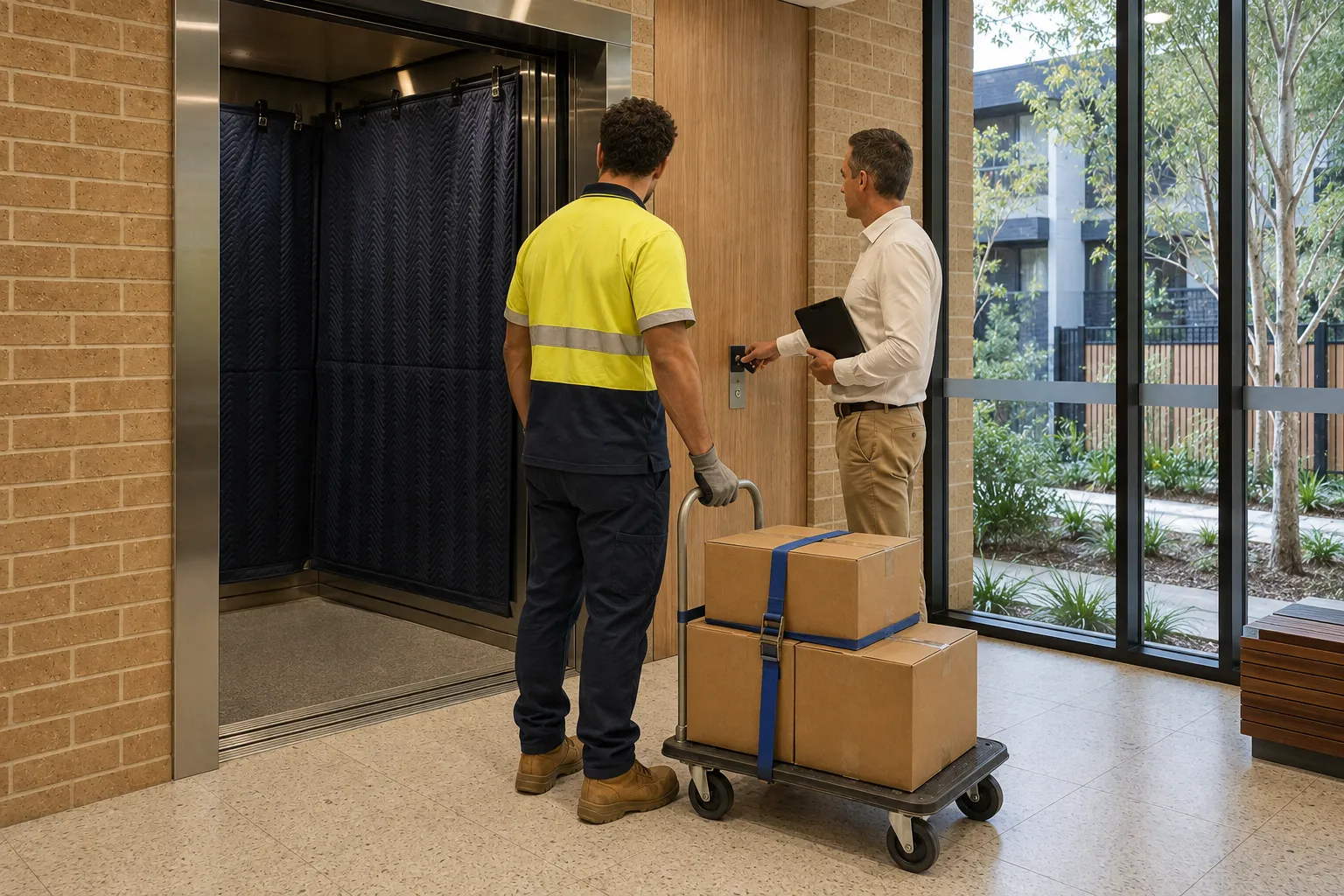
Lift access and precise moving times are among the most important details to arrange before an apartment move. Without a confirmed booking, the move can be delayed by building restrictions, security procedures or clashes with other residents. Booking the lift early gives the removalist a clear window for loading and unloading while reducing disruption to common areas.
Most apartment buildings require a formal lift booking and may also require a move-in form, minimum notice period, refundable bond or proof of public liability insurance. Contact building or strata management one to two weeks before moving day, or earlier if the building has a longer notice period. Confirm which lift can be used, whether protective coverings are provided, where the truck can park and whether there are penalties for arriving late or exceeding the allocated time.
Lift availability may be limited to particular weekdays or hours, while some buildings restrict moves on weekends, public holidays or after hours. Where possible, secure a suitable time slot early if the building has only a small number of permitted moving windows.
If moving between two apartments, check whether separate lift bookings are required at each property and allow enough travel time between them. Once the booking is confirmed, provide the removalist with the exact time window, parking restrictions, building contact details and any access instructions. Reconfirm the booking shortly before moving day so any changes can be addressed before the truck arrives.
Parking and loading access can affect how efficiently an apartment move runs. Limited loading areas, vehicle restrictions and busy streets can force removalists to carry furniture further, increasing the time and effort required. Organising access early helps reduce delays, extra costs and disruption to other residents.
Contact the building manager, strata manager or concierge to confirm where the truck can park, whether there is a loading bay or service driveway and whether height, weight or vehicle-length restrictions apply. Check when trucks are permitted to arrive and whether a temporary parking permit or reserved truck zone is required.
If the moving truck needs to occupy part of the public road reserve, homeowners should check whether a Road Occupancy Licence or another council approval is required.
Before moving day, walk through the planned route from the truck to the apartment and identify narrow hallways, tight corners, stairs, low ceilings or long carrying distances. Compare these areas with the dimensions of large furniture and appliances so dismantling or special handling can be arranged beforehand.
Also check that gates, doors and access points can be opened repeatedly during the move. If the building does not provide protective coverings, confirm whether the removalist needs to bring floor, wall or lift protection.
Measuring the apartment and its access points before moving day can prevent delays, damage and unexpected handling costs. Large furniture may need to be dismantled or moved through an alternative route if it cannot fit through the entrance, lift, hallway or stairs.
Measure the narrowest points along the route from the truck to the apartment, including entrance doors, lift openings and interiors, staircases, landings, corridors and tight turns. Also record the height, width and depth of bulky items such as sofas, fridges, washing machines, wardrobes, bed frames and mattresses.
Compare furniture measurements with the narrowest access points rather than relying on the overall size of a room or hallway. Allow practical clearance for protective blankets, hands and door frames, particularly when moving heavy items through tight spaces.
Stairs, narrow hallways, tight corners and restricted lifts can make an apartment move more time-consuming and physically demanding. Identifying difficult access points before moving day gives the removalist enough information to plan the appropriate equipment, crew size and time required.
Stairs, restricted lifts, long carrying distances and narrow entrances may all be considered difficult access, potentially affecting the required crew, equipment, moving time and cost.
Before the move:
Planning difficult access helps reduce unnecessary carrying, protect furniture and common areas and keep the move running efficiently.
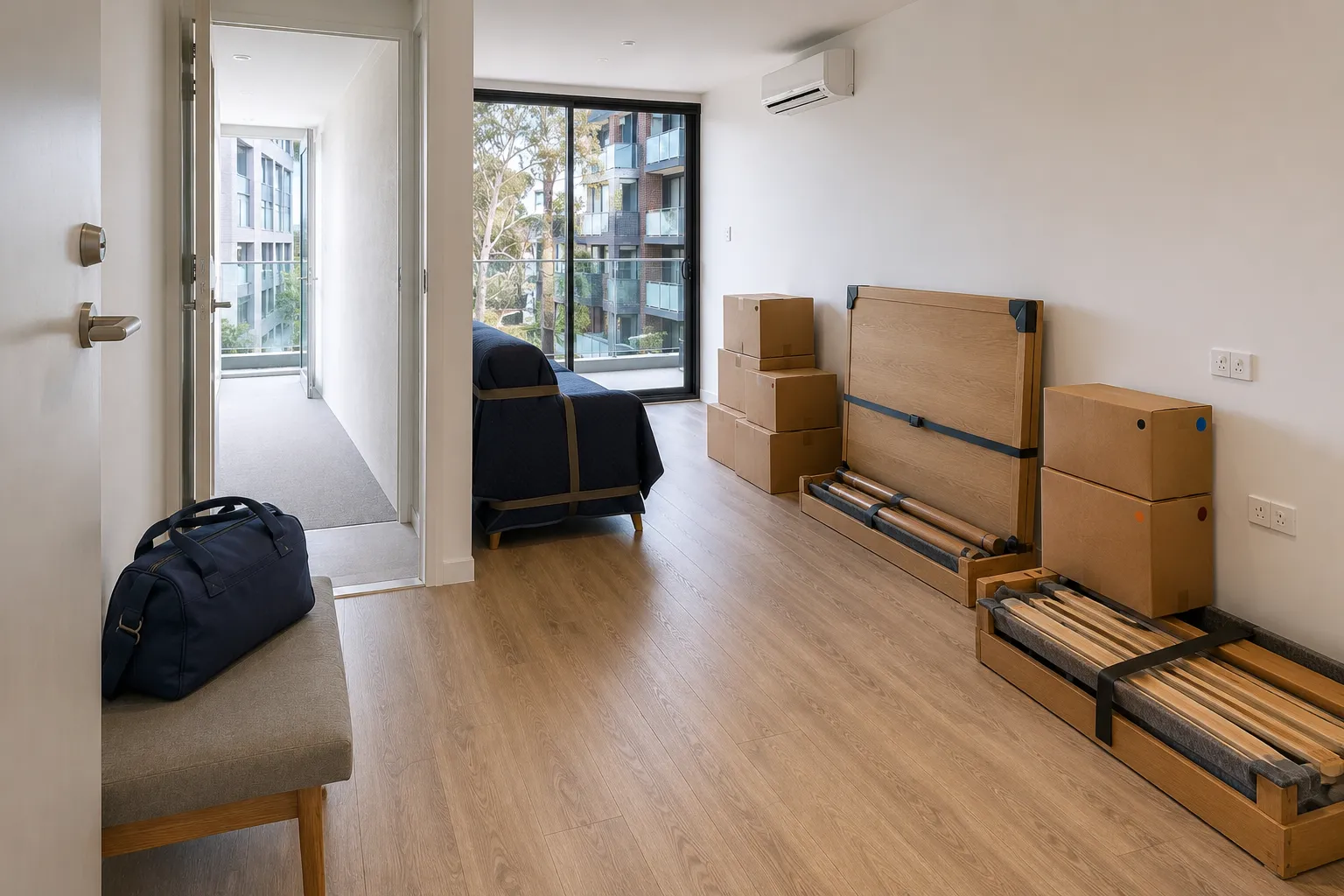
Preparing the apartment before the removalists arrive can make the move faster, safer and more organised. Clear access routes, protect vulnerable surfaces and decide where furniture will go so the crew can unload without unnecessary obstacles or delays.
Remove rugs, shoes, boxes, small furniture and other items from hallways, doorways and areas where large furniture needs to be carried or turned. Keep children and pets away from actively moving areas.
Check whether the building requires protective coverings for floors, walls, doors or lifts. Confirm whether these are supplied by building management or the removalist and have them ready before the truck arrives.
Decide where larger items will go before moving day. Check that their planned positions will not block doorways, cupboards or important access points. Label boxes by room so the removalist can place them directly where they belong. This is useful in smaller apartments where floor space is limited.
Set aside items needed during the first few hours rather than packing them deep inside the truck. Keep essentials such as keys and access fobs, phone chargers, toiletries, medication, important documents, cleaning supplies, a change of clothes, water and basic kitchen items readily available.
It is also worth reviewing what to keep with you on moving day so medication, important documents, valuables and other essential items do not end up inside the removalist truck.
Having clear pathways, planned furniture placement and accessible essentials can help the crew work efficiently and make the first few hours in the new apartment much easier.
Planning the layout before the removalist arrives can make unloading faster and prevent boxes and furniture from blocking already limited apartment space. Decide where large items will go, label boxes clearly and keep essential belongings easy to access.
Before moving day:
A clear layout and organised boxes give the crew straightforward unloading instructions, reduce unnecessary handling and help make the apartment functional sooner.
Insurance and access requirements can affect whether a removalist is permitted to enter an apartment building and how damage to belongings or common property is handled. Confirm these details with the building manager, strata manager or concierge well before moving day so any approvals or documents can be arranged in advance.
Ask whether the building requires the removalist to provide proof of public liability insurance or a certificate of currency. Also check whether there are specific requirements for protecting lifts, walls, floors and other common areas.
Understand what insurance or transit cover the removalist provides and ask about exclusions or limits for owner-packed boxes, fragile items, valuables, glass furniture and specialist items. Find out how claims are handled if something is damaged.
Check how the removalist will access the building and whether the crew needs to sign in, show identification or collect temporary keys, fobs or access cards. Confirm access to the main entrance, loading area, lift, security gates and apartment floor and make sure the removalist has a contact for the building manager or concierge.
Some buildings require a refundable bond before a move. Confirm the amount, payment method and refund conditions and ask whether photographs or a condition report is needed before the move.
Confirming insurance, access and building requirements early helps prevent avoidable delays and keeps all necessary documents and contacts organised for moving day.
Even a well-planned apartment move can face delays caused by lift access, traffic, parking or building restrictions. Confirm the approved moving window and allow extra time for security checks, loading, unloading and shared access areas. If the move involves two properties, leave enough time between bookings to account for unexpected delays.
Before moving day, ask building management what happens if the booked lift or loading area becomes unavailable and whether alternative access is permitted. Keep the removalist, building manager and concierge contact details readily available so issues can be resolved quickly.
Keep important documents and access information, including lift bookings, building approvals, parking arrangements, keys and access fobs, somewhere easy to reach. Preparing for possible delays creates a more flexible schedule and helps keep moving day running smoothly.
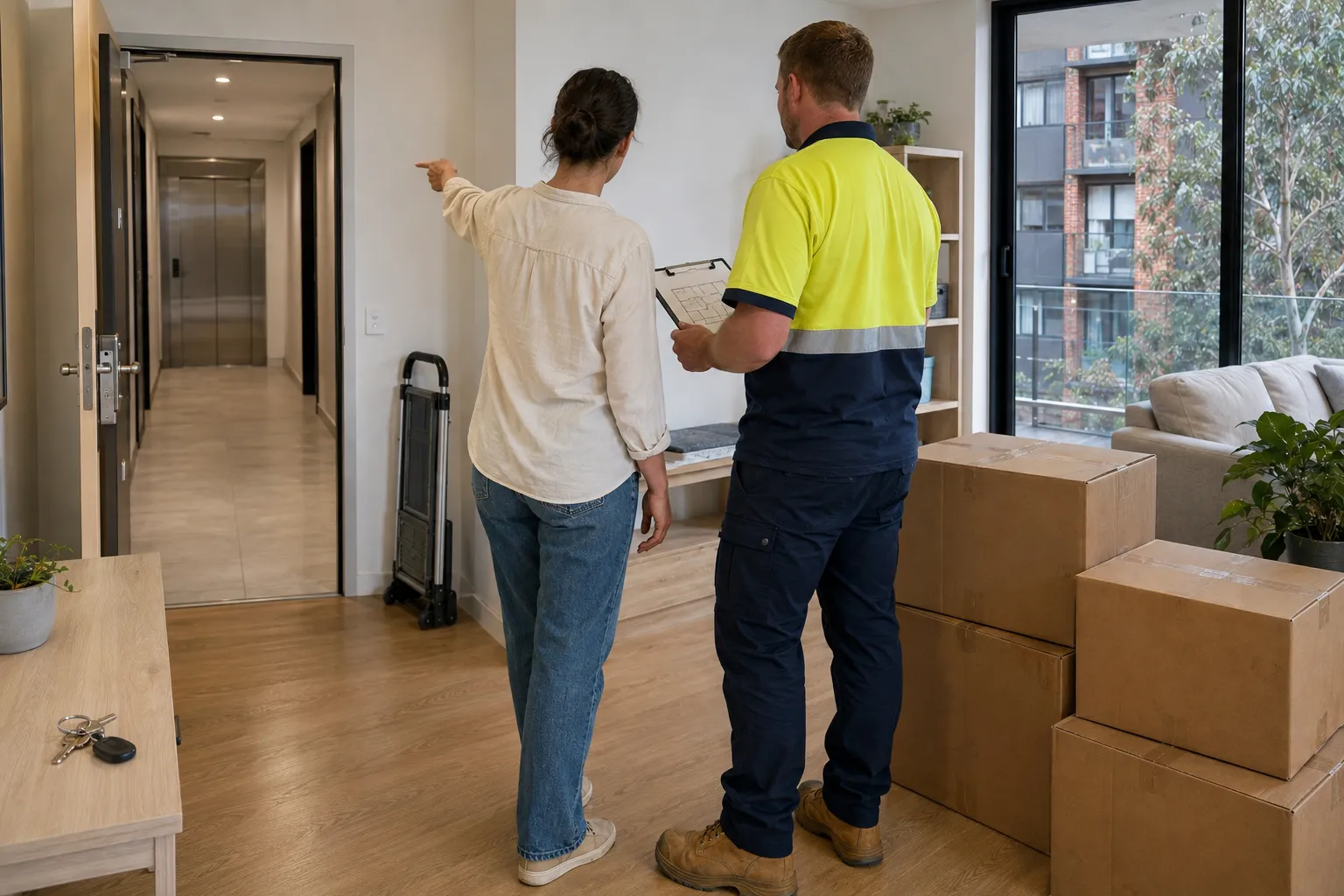
A final check with the removalist a few days before moving day can prevent misunderstandings, delays and unexpected costs. Apartment moves require extra coordination, so make sure the removalist has the correct building access, parking arrangements and approved moving times.
Reconfirm the move date, arrival time and expected duration, then provide the approved lift booking and building access details. Make sure the removalist knows where the truck can park, which entrance to use, the apartment floor and unit number, which lift or stairs will be used and any height, weight or time restrictions.
Share building contact details and any required move-in forms so access issues can be resolved quickly.
Provide an updated list if the inventory has changed since the original quote. Highlight bulky, fragile or valuable items and confirm whether dismantling, reassembly, packing or unpacking services are included.
Also clarify who is responsible for disconnecting appliances, as electrical and plumbing work may need to be arranged separately.
Reconfirm the quote, payment terms and any potential additional charges for stairs, long carries, travel, tolls, waiting time or access delays. Check what insurance or transit cover applies and whether there are exclusions for owner-packed or fragile items.
Having these details confirmed in advance gives the homeowner and removalist a clear plan for moving day and reduces the risk of last-minute surprises.
Moving into an apartment is easier when vital details are organised before moving day. Confirming lift, parking and building access, arranging insurance, measuring entry points and planning furniture placement can help reduce delays, protect belongings and make the move more efficient.
Norm Eacott Removals & Storage understands that careful preparation can make the difference between a stressful move and a well-organised relocation. By coordinating with building management and the removalist, homeowners can minimise disruptions, settle in sooner and enjoy their new apartment with fewer surprises.

Give one of our friendly team a call, and if we’re busy moving boxes you’ll get a call back within the hour!

