
Let's move!
Give one of our friendly team a call, and if we’re busy moving boxes you’ll get a call back within the hour!

Difficult property access can affect the time, cost and complexity of a move. Tight staircases, steep driveways, limited parking, low ceilings, long carrying distances and restricted entry points can all influence how safely and efficiently belongings are handled. When choosing removalists in Central Coast, it is important to provide clear information about these conditions before moving day. Norm Eacott Removals & Storage assesses access requirements early so the right vehicle, equipment and crew can be organised.
Understanding what removalists consider difficult access helps customers set realistic expectations and avoid preventable delays. It also allows removalists to provide a more accurate quote and plan how furniture, appliances and boxes will be moved while protecting the belongings, property and people involved.
Difficult access refers to any physical feature, parking restriction or building rule that makes it slower, harder or less safe to move belongings between the truck and the rooms of a property.
It can affect either the collection address, the delivery address or both. Difficult access is not limited to stairs or narrow doors. It may also include long driveways, limited truck parking, lift-booking requirements, low car park clearances, uneven paths or large items that cannot pass through the available entry points.
Providing accurate access details allows the removalist to determine:
The earlier these conditions are identified, the easier it is to plan the move efficiently.
Outside access is often one of the biggest factors affecting how quickly a truck can be loaded or unloaded. Street width, parking availability, driveway design and the distance between the vehicle and the entrance can all influence the moving process.
Large removal trucks need enough space to enter the street, turn safely and park near the property. Access may be difficult where there are:
If a truck cannot park safely or legally near the property, the crew may need to park further away and carry belongings over a longer distance. This increases handling time and physical effort.
In some locations, a smaller vehicle may be used to transfer belongings between the property and a larger truck parked nearby. This shuttle arrangement can be useful where streets, driveways or car parks cannot accommodate a standard removal truck, but it usually requires additional time and planning.
Driveways can create difficult access when they are steep, narrow, curved or unsuitable for a heavy vehicle.
Potential problems include:
Even where a truck appears able to fit, the removalist must consider whether it can enter, manoeuvre and remain safely positioned while being loaded.
If the driveway is unsuitable, belongings may need to be moved from the street or another safe parking location. Photos of the entrance, driveway and turning area can help the removalist decide which vehicle is appropriate.
Parking does not need to be far away to affect a move. Any situation where the truck cannot park close to the main entry should be disclosed, particularly where furniture must be carried along a long path, driveway or corridor.
Restrictions may include:
Where the truck may affect traffic, occupy restricted road space or require temporary traffic controls, customers should check with the relevant council, road authority or building manager to determine whether approval is required. Any permits or parking arrangements should be organised before moving day.
Hills, stairs, uneven paths and the need to cross a busy road or shared driveway can make a long carry more demanding. These conditions may require additional labour, equipment or time.
Once belongings reach the entrance, the internal layout of the property becomes the next major consideration. Stairs, lifts, hallways, doorways and room positions can all affect how furniture is moved.
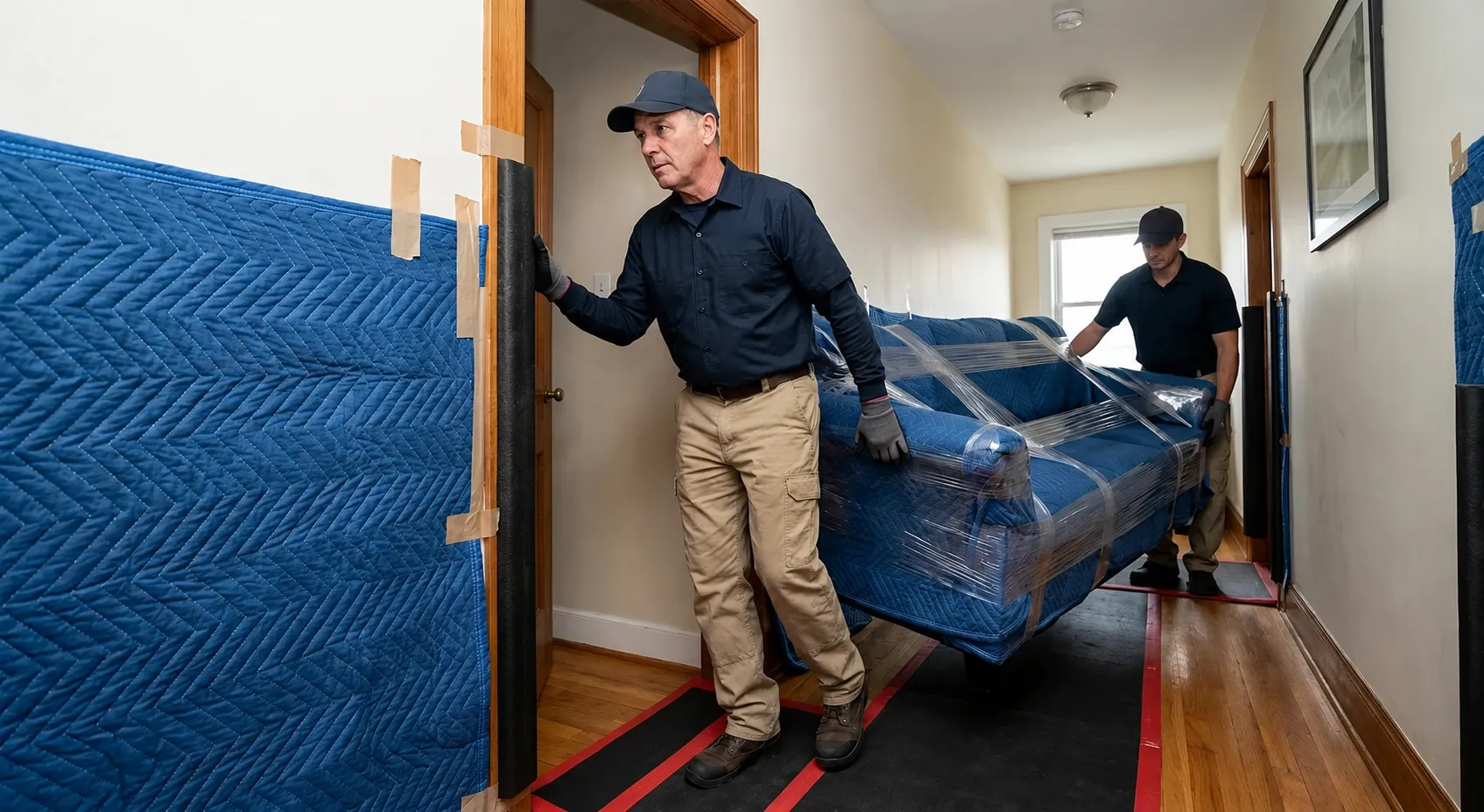
Stairs are one of the clearest examples of difficult access. Each flight increases handling time and physical strain, particularly when heavy or bulky items must be moved between levels.
Stairs may be especially challenging when they are:
Items such as double-door refrigerators, king-size bed frames, large buffets, recliner lounges and solid timber furniture can be difficult to turn or tilt on narrow stairs.
Depending on the item and the stair dimensions, partial dismantling may be the safest and most practical option. Customers should advise the removalist how many flights of stairs are present and whether they are internal or external.
Photos and measurements of difficult stairwells may also be requested before the move.
A lift can make a move easier, but it may also introduce restrictions that slow the process. Small lift cars, limited booking periods and long corridors can all affect how quickly belongings are moved.
Important lift-related details include:
Apartment residents should check their building’s by-laws and moving procedures. Requirements vary between strata schemes and may include lift protection, loading-bay bookings, security access and restrictions on moving times.
Furniture should be compared with the lift and doorway dimensions before moving day. If an item will not fit, it may need to be dismantled or moved using an alternative method.
Narrow or awkward internal spaces can make otherwise manageable furniture difficult to move.
Access concerns may include:
The removalist may request measurements of doorways, hallways and critical turning points for unusually large items. For more complicated properties, photographs or a pre-move site assessment may also be recommended.
Where an item cannot pass through an opening, the crew may suggest dismantling it, temporarily removing a suitable door or consulting an appropriate tradesperson about another access method. Permission before changing common property may also be required in strata properties, particularly where windows, fixed railings or structural components are involved.
Some belongings require additional preparation because of their weight, dimensions, shape or fragility. Even a property with good vehicle access can be considered difficult when a heavy item is located upstairs, in a rear room or behind a narrow entry.

Items that may require extra labour, equipment or preparation include:
These items may be too heavy for standard manual handling or may require several crew members to keep the load controlled.
The quoted cost may increase where additional labour, lifting equipment, dismantling or specialist handling is required. Customers should disclose these items when requesting a quote rather than waiting until moving day.
An item does not need to be extremely heavy to create access problems. Long, wide, unbalanced or delicate pieces can also be difficult to guide through stairs and hallways.
Examples include:
These items may require additional handlers, protective wrapping, removal blankets and corner protectors. Floors, walls, stair rails and door frames may also need protection where space is limited.
Moving costs are generally influenced by the time, labour, vehicle requirements and equipment needed to complete the job safely.
Difficult access can increase the duration of a move because every item takes longer to carry, position and protect. Multiple flights of stairs, long walking distances and restricted lifts reduce how quickly the crew can move between the property and the truck.
Access conditions may also affect pricing where the move requires:
Not every removalist applies a separate difficult-access surcharge. In many cases, the additional cost is reflected in the estimated labour time, crew size or equipment included in the quote.
Providing accurate information and preparing the property can also help reduce moving costs.
Customers should describe the entire access route, starting from the street and continuing through to the rooms where furniture will be collected or delivered.
Important information includes:
Advise the removalist about:
Do not assume that a truck will fit based only on the space available to a car. Send photographs and measurements if there is any uncertainty.
Describe any features that may slow or restrict movement, including:
Confirm:
Provide a list of items that may need special handling, such as:
Include the current location of each item and whether it must be moved up or down stairs.
A clear pre-move access summary may include:
Difficult access does not necessarily prevent a move from being completed safely and efficiently. It simply means that additional planning may be required.
Steep driveways, stairs, limited parking, long carrying distances, lift restrictions, shared accessways and oversized belongings can all influence the vehicle, crew, equipment and time needed for the job.
By identifying these conditions early, Norm Eacott Removals & Storage can prepare a more accurate quote and organise suitable resources for the move. Clear communication, photographs, measurements and site assessments help reduce delays, protect belongings and prevent last-minute changes, allowing even a challenging property move to be managed effectively.

Give one of our friendly team a call, and if we’re busy moving boxes you’ll get a call back within the hour!

