Let's move!
Give one of our friendly team a call, and if we’re busy moving boxes you’ll get a call back within the hour!

Working out how much storage space is needed when moving house depends on more than the size of the property. A removalist in Gosford can help assess furniture, appliances, boxes and bulky belongings to determine how much space is likely to be required.
Packing methods, storage duration and how often belongings need to be accessed can also affect the amount of space needed. Careful planning helps prevent items from being overcrowded while avoiding the cost of paying for unused storage space.
Norm Eacott Removals & Storage can assist with planning storage requirements as part of a house move. Considering the volume of belongings, packing arrangements and storage timeframe can make it easier to choose a practical and cost-effective storage solution.
Estimating storage space accurately helps prevent paying for unused capacity or finding that a unit is too small. The process starts with listing the belongings that need to be stored, estimating their overall volume and allowing enough room for practical access.
Start with a room-by-room inventory of furniture, appliances, boxes and bulky items. Beds, wardrobes, sofas, dining tables, white goods and shelving should be measured where possible, while items such as bikes, lawnmowers and barbeques should be included separately because they can be difficult to stack.
It is also useful to estimate the number of boxes required. A typical two-bedroom home may require around 40 to 60 medium boxes, while a three-bedroom home may need around 60 to 80 boxes, depending on the amount of stored contents. Estimating the number of moving boxes required can also provide a clearer picture of the total storage volume.
Storage requirements vary depending on the size and contents of the property. As a rough starting point, common floor-area estimates include:
These figures are general benchmarks rather than fixed requirements. The actual amount needed depends on furniture sizes, the number of belongings and how efficiently everything can be arranged.
Storage capacity is also three-dimensional. A unit with greater ceiling height may hold more belongings than a unit with the same floor area, provided items can be stacked safely. For a more accurate assessment, the total volume of furniture, boxes and other belongings should therefore be considered alongside floor area.
Access requirements can affect the amount of space needed. Belongings that will remain untouched throughout storage can be arranged more compactly, while frequently needed items require a layout that allows them to be reached without moving several other items.
Allowing some additional space can therefore make storage more practical, when belongings will be stored for an extended period or accessed several times during the move.
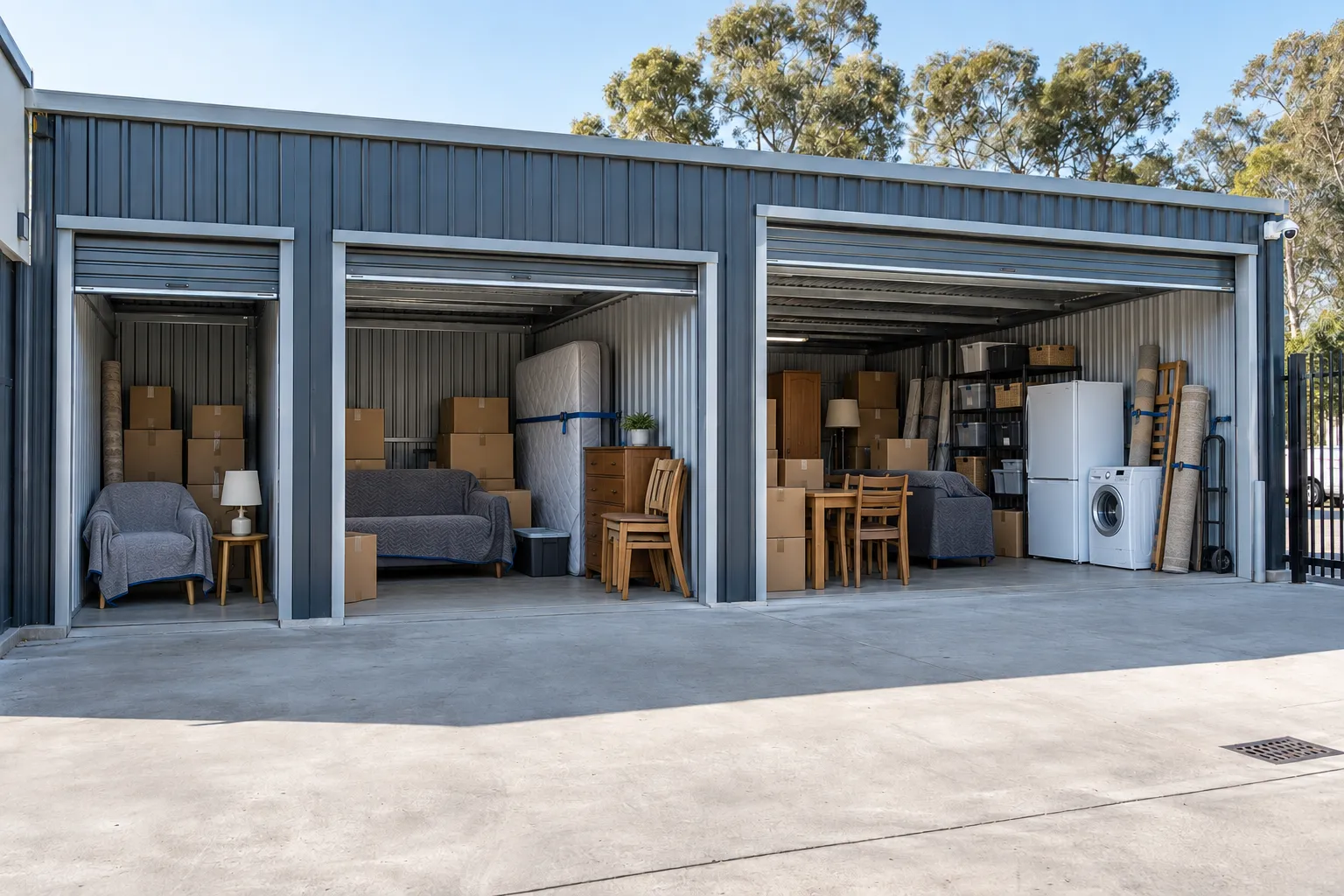
The amount of storage required depends on both the size of the property and how heavily it is furnished. The estimates below are rough guides for household contents rather than fixed unit requirements, with additional space needed for larger furniture, bulky belongings or regular access.
A typical one-bedroom flat may require around 35 to 50 sq ft of storage. This can accommodate a bed and mattress, one or two wardrobes, a small sofa, basic living and dining furniture, kitchen appliances and around 15 to 25 moving boxes. Larger sofas, sports equipment or additional furniture may push the requirement closer to 50 to 60 sq ft.
A two-bedroom home will need around 50 to 80 sq ft of storage. This can include two beds and mattresses, wardrobes, a sofa, dining furniture, shelving, standard appliances and around 25 to 40 boxes. The lower end may suit tightly packed storage where access is limited, while 70 to 80 sq ft may provide more practical room for arrangement and retrieval.
A typical three-bedroom home may require 80 to 120 sq ft, depending on the amount of furniture and whether outdoor belongings are included. This allows for three beds, wardrobes, living and dining furniture, office items, appliances and around 40 to 60 boxes. Larger family homes or belongings that need regular access may require space towards the upper end of the range.
These figures are useful starting points rather than fixed requirements. Decluttering and dismantling suitable furniture can reduce the overall volume, while bulky furniture, outdoor equipment and belongings requiring regular access may increase the amount of space needed.
Storage needs can vary between households, even when properties are the same size. The main differences usually come down to the type and quantity of belongings, how efficiently they can be arranged and how much access is required during storage.
Bulky furniture and awkwardly shaped items can quickly increase the space required. Large sofas, king-size beds, solid wood furniture, American-style fridge-freezers, pianos and garden equipment take up more room than compact or dismantled items. Books, tools, hobby equipment and other smaller belongings can also add significant volume when stored in large quantities.
The amount of storage space can often be reduced before moving day. Removing unwanted furniture, duplicate items and belongings that are no longer needed reduces the overall volume before storage begins.
Beds, tables and shelving can also be dismantled where practical, allowing larger pieces to be positioned more efficiently. Screws, brackets and other fittings should be labelled and kept with the relevant furniture to make reassembly easier later.
Short-term storage may allow belongings to be arranged more compactly when they will not need to be accessed regularly. Longer-term storage requires greater consideration of organisation, protection and retrieval.
Seasonal equipment, documents or other belongings that may be needed during the storage period should be positioned where they can be reached without disrupting the rest of the unit. Regular access may therefore require more space than storage, where everything remains untouched until the move is completed.
The right storage size depends on what is being stored, not just the number of rooms in a home. Boxes and smaller belongings may fit into a compact unit, while furniture, appliances and bulky outdoor items can require considerably more space.
Compact units can suit moving boxes, clothing, books, kitchenware and belongings from a single room. Similar-sized boxes can help create stable stacks and make better use of the available height, provided they are suitable for stacking.
Medium units are more suitable when storage includes beds, wardrobes, sofas, dining furniture, shelving and appliances alongside boxes. Dismantling suitable furniture can reduce the floor space required and make it easier to arrange smaller belongings around larger pieces.
Larger units are needed for the contents of several rooms or an entire home. Multiple beds, sofas, wardrobes, appliances, office furniture and numerous boxes can quickly increase the required volume.
The overall height and layout of the unit should also be considered. A unit with useful vertical space may accommodate more belongings, although stacking should always be carried out safely and in accordance with the storage provider's requirements.
Bicycles, barbeques, lawnmowers, sporting equipment and large mirrors can take up more space than expected because they are difficult to stack or dismantle. These items should be included when estimating the overall volume to determine whether additional capacity is needed.
Furniture and large household items can take up substantial storage space because they are harder to stack than boxes. Sofas, beds, wardrobes, dining furniture and appliances should be measured before storage is booked to get a more accurate estimate.
Measure sofas, beds, wardrobes, dining tables, bookcases and other large pieces before choosing a storage unit. Where practical, dismantling suitable bed frames, tables and shelving can allow furniture to be stored more compactly. Small fittings should be labelled and kept together for easy reassembly.
Fridges, freezers, washing machines, dryers and other large appliances need to be included at their full size. Pianos, exercise equipment, outdoor furniture and large cabinets may also require additional space because they cannot always be dismantled or stacked efficiently.
Dismantled furniture, sturdy boxes and smaller belongings may be arranged vertically to make better use of the unit's height. Heavy items should remain stable and appropriately positioned, while fragile belongings should be protected rather than forced into gaps.
Safe Work Australia provides further information about lifting and carrying risks, which should be considered when moving heavy boxes, furniture and appliances.
The storage provider's recommendations should be followed when deciding how items can be stacked or positioned within the unit.
A tightly packed unit may work for belongings that will not be needed until the end of the storage period. If regular access is required, some floor space should be left clear so furniture and boxes can be reached without moving other heavy items.
Self-storage may suit households that want direct control over their belongings and regular access throughout the storage period. A dedicated unit allows items to be added, removed and reorganised as needed, although transport, loading and unloading need to be arranged separately.
Removalist storage can be more convenient when storage forms part of a larger move. The removalist can collect belongings, handle heavy furniture and appliances and transfer everything into storage, reducing the need to coordinate separate transport and loading. This can be useful for interstate moves, renovations or gaps between properties.
The choice depends on the level of access, handling and transport assistance required. The expected storage period, quantity of belongings and moving schedule can also help determine which arrangement is more practical. Comparing the available removalist storage options can help households choose an arrangement based on access, handling and storage duration.
NSW Government guidance on choosing a removalist also recommends reviewing contract terms, possible storage charges and insurance arrangements before booking.
The storage period depends on the circumstances of the move. Short-term storage may only be needed for a few weeks while waiting between properties, whereas renovations, delayed settlements or interstate moves can require storage for several months. Long-term storage may be suitable for furniture, seasonal belongings, documents or other items being kept for future use.
The longer belongings remain in storage, the more important organisation and protection become. Items that are unlikely to be needed can be placed towards the back, while frequently accessed belongings should remain easier to reach.
When the moving date is uncertain, allowing some additional time can prevent the need to rearrange transport and storage arrangements at short notice. Storage planning can take into account the expected timeframe, quantity of belongings and wider moving schedule.
Efficient packing can help fit more belongings into the available storage capacity while keeping items stable and protected. Box selection, furniture preparation and the order in which belongings are loaded can all affect how effectively the space is used.

Use strong, similar-sized boxes where practical to create stable stacks and reduce gaps. Smaller boxes are more suitable for heavy items like books, while clothing, bedding and other lightweight belongings can go into larger boxes.
Labels should face the access area so contents can be identified without unnecessarily moving other boxes.
Beds, dining tables and shelving can sometimes be dismantled and stored more compactly. Screws and fittings should be placed in labelled bags with the relevant furniture.
Large items should be positioned securely, with suitable boxes and smaller belongings arranged around them where appropriate. Stacking should take account of the weight and stability of each item rather than simply filling every available gap.
Items that will not be needed during storage can be placed towards the back, while frequently accessed boxes and seasonal belongings should remain closer to the entrance. For longer storage periods, a practical access path can make retrieval easier, even if it uses slightly more space.
Storage should ideally be booked once the moving timeline and approximate volume of belongings are known. For straightforward moves, this may be several weeks before moving day, while interstate moves, renovations, delayed settlements and staged relocations may require earlier planning.
Booking before packing is complete can also help establish a clear storage capacity and allow adjustments if the final volume changes. An inventory of furniture, appliances, boxes and bulky items can provide a useful starting point for choosing the appropriate unit size.
Before moving day, the storage start date, access arrangements, expected storage period and collection or delivery details should be confirmed. When storage forms part of the removal process, these arrangements can be coordinated with the wider moving schedule.
The easiest way to reduce storage costs is to limit the amount of space required before booking a unit. Decluttering unwanted belongings, measuring larger items and packing efficiently can help make better use of the available capacity without overcrowding the unit.
Separate belongings into items to keep, sell, donate or dispose of before estimating storage needs. Removing unwanted furniture, duplicate items and rarely used belongings can reduce the required unit size. Only items that are definitely going into storage should be included in the final estimate.
Measure larger belongings such as beds, sofas, wardrobes, tables and appliances rather than relying only on the size of the property. Dismantling suitable furniture and using available vertical space safely can help maximise the unit's capacity.
The height and total volume of the storage unit should be considered alongside floor area, particularly when comparing different storage options.
Strong, similar-sized boxes are easier to arrange and can create fewer gaps. Items that will not be needed during storage can be placed towards the back, while frequently accessed belongings should remain within reach.
Planning the layout before loading can reduce wasted space while still allowing safe access. The aim is to choose enough capacity for the belongings without paying for substantially more space than the move requires.
Choosing the right amount of storage space when moving house starts with assessing what needs to be stored, how it will be packed and how long it will remain in storage. Measuring larger items, decluttering unwanted belongings and considering the unit's total volume can help avoid overcrowding or paying for unused capacity.
Norm Eacott Removals & Storage can help households plan practical storage solutions based on the volume and type of belongings involved. With careful planning and an appropriate storage arrangement, belongings can remain organised and protected while the move progresses smoothly.

Give one of our friendly team a call, and if we’re busy moving boxes you’ll get a call back within the hour!

