Apartment and unit relocations involve more than simply loading furniture onto a truck. Shared access, building rules, limited parking and lift availability can all affect how efficiently a move progresses. As an experienced removalist in Gosford, Norm Eacott Removals & Storage understands these challenges and the importance of careful planning before moving day.
Understanding the most common causes of delays helps set realistic expectations and supports smoother apartment and unit moves. From lift bookings and parking restrictions to stair access, packing readiness and building documentation, each factor can influence the timing, logistics and overall cost of an apartment or unit move.
Apartments and units introduce logistical requirements that are not usually involved in standard house moves. Lifts may need to be booked, strata rules must be followed and access windows may be restricted. When these details are overlooked, the removalist may be unable to begin work or may have to pause the move until approval is obtained.
Confirming the building’s requirements in advance is one of the most effective ways to prevent avoidable delays.
Many apartment buildings require residents to reserve a goods lift or nominate a specific lift before furniture can be moved. Building management may allocate a fixed time window and allow only one move during each session.
Delays can occur when:
Residents should confirm the booking date, time and lift number in writing. They should also ask who is responsible for installing protective materials and how the removalist will gain access to the lift.
A mismatch between the removalist’s arrival time and the building’s allocated slot can disrupt the entire moving schedule.
Strata schemes often have by-laws or building procedures governing moves. These requirements are designed to protect common property and reduce disruption to other residents.
Rules may cover:
If these requirements are not met, building management may stop or delay the move. Residents should request the building’s moving-in or moving-out guidelines and provide them to the removalist before the booking is finalised.
Clear instructions allow the crew to bring suitable equipment, plan the moving sequence and estimate the required time more accurately.
Apartment buildings may restrict which entrances and loading areas can be used. Security gates, swipe cards, keypad entry and locked service doors can also delay the start of a move when access has not been arranged.
Before moving day, confirm:
Any access card or code should be tested before the removalist arrives.
Truck access can significantly affect the speed of an apartment or unit move. Even an experienced crew will lose time if the vehicle cannot park close to the building or must be moved during the job.
Apartment blocks and inner-city units are often located on narrow streets with loading limits, clearways, tow-away zones or restricted parking. Checking these conditions in advance supports more realistic scheduling and helps avoid last-minute complications.
The closer the truck can park to the entrance, the more efficiently furniture and boxes can be loaded. When the vehicle must park further away, every item takes longer to move.
Long carrying distances can become particularly time-consuming where access also includes:
The impact varies depending on the size of the move, the number of items and the available equipment. A long carry may not prevent the move, but it should be included in the quote and moving schedule.
Many apartment buildings rely on designated loading zones or limited on-street parking. These spaces may have strict time limits or may only be available during certain hours.
Residents should check:
If a council permit or temporary no-parking arrangement is needed, it may have to be organised several days in advance. Where a move requires traffic control or approval to occupy part of the road reserve, the relevant council requirements should be checked well in advance. Responsibility for applying and paying for permits, parking or other access arrangements should be confirmed before moving day.
Basement and undercover car parks may appear convenient, but many moving trucks cannot enter because of low ceilings, pipes, ramps or weight restrictions.
The truck’s height and access requirements should be checked against the building’s clearance limits before the move. If the main truck cannot reach the loading area, the crew may need to work from the street or use a smaller shuttle vehicle, increasing carrying distances and handling time.
Security gates, remote controls and swipe-card access should also be arranged before the crew arrives.
Stairs, tight corridors and restricted internal access are common causes of longer apartment and unit moves. These conditions affect how quickly each item can be handled and may require additional staff, equipment or dismantling.
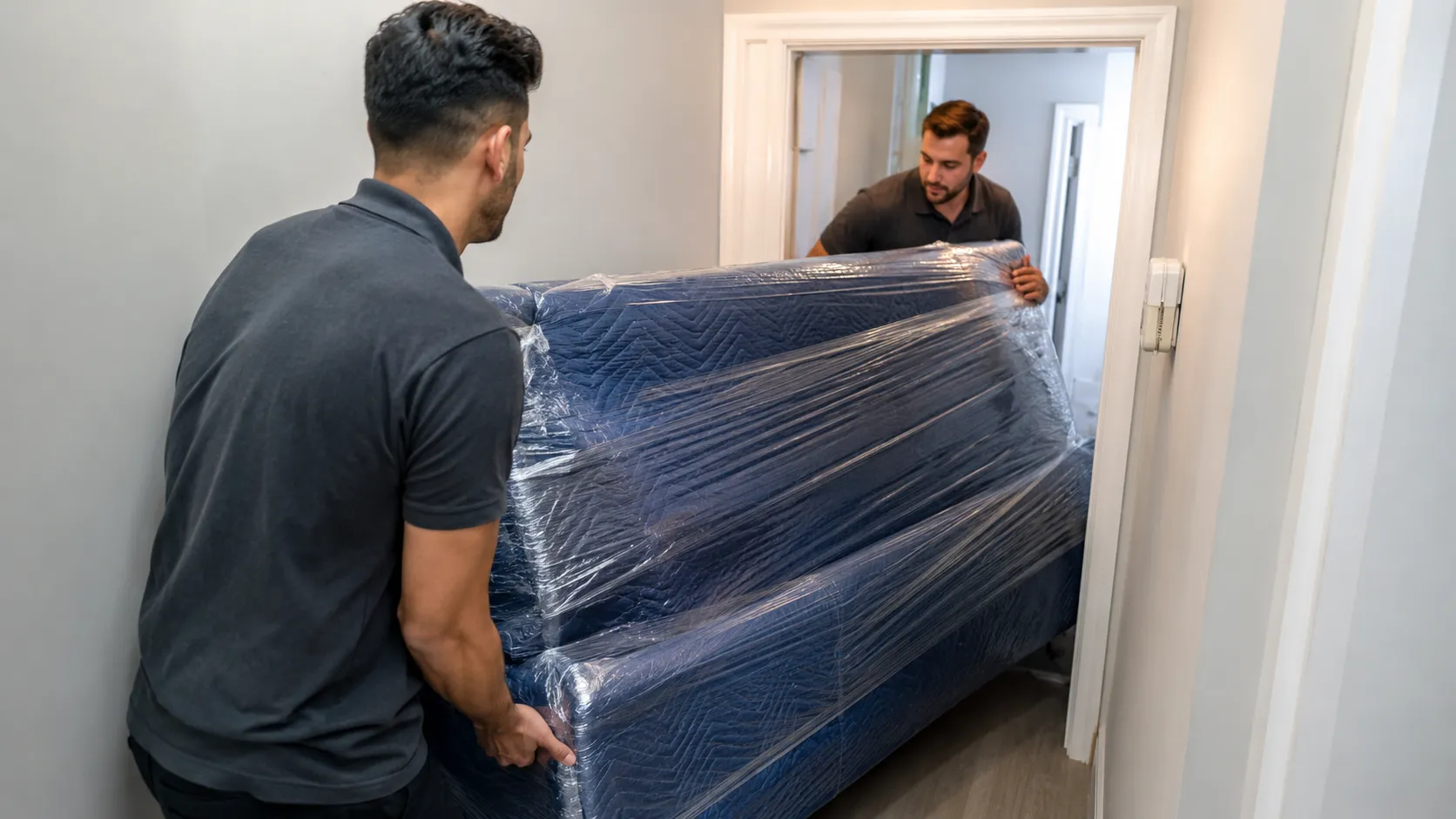
Identifying difficult access before moving day allows the removalist to prepare an appropriate plan and provide a more accurate estimate.
Stairs limit how much can be carried at one time and require greater control with every load. Larger items such as fridges, washing machines, mattresses and solid timber furniture often require two-person handling.
Multiple flights of stairs can substantially extend moving time, particularly in buildings without lift access. Fatigue also develops more quickly, so crews may need short breaks to maintain safe handling practices.
Residents should advise the removalist of:
Certain oversized or heavy items may require additional preparation or specialist equipment.
Narrow hallways, tight doorways and sharp turns slow progress because large items must be carefully angled and repositioned. Furniture that could be moved directly through a house may need to be dismantled before it can pass through an apartment corridor or lift.
Before moving day, measure:
Bed frames, wardrobes, dining tables and modular lounges should be dismantled in advance where practical.
Internal doors may sometimes be removed temporarily to provide additional clearance, but only where this is permitted. Any change affecting common property or shared building components should be approved by the building manager or strata representative beforehand.
Storage cages, garages, balconies and courtyards are often overlooked when the size of an apartment move is estimated. Items stored in these areas can significantly increase the total volume and may affect the required truck size, crew and timeframe.
A complete inspection of every storage area before requesting a quote helps prevent last-minute cost surprises.
Storage cages and basement lockers may contain bicycles, spare furniture, tools, seasonal belongings and packed cartons.
Delays can occur when these items were not included in the original quote or when access is unavailable because keys, swipe cards or building permissions have not been arranged.
Residents should declare all storage areas and confirm how the crew will access them before moving day.
Garages and allocated parking spaces may hold fridges, freezers, gym equipment, tool chests, shelving and other bulky items.
These belongings increase loading time and truck space requirements. Access can also be difficult where underground car parks have low ceilings, narrow ramps or long distances between the garage and the loading point.
Where the truck cannot reach the garage, the crew may need to shuttle items using trolleys or a smaller vehicle.
Balconies and courtyards often contain outdoor furniture, BBQs, pot plants and storage boxes. Large planters can be heavier than expected and may require extra labour or handling equipment.
Tight balcony doors and awkward turns can also make these items difficult to move through the unit.
Small items should be packed, pathways cleared and loose soil or water removed where appropriate before the crew arrives. Oversized or unusually heavy outdoor items should be disclosed during quoting.
Unpacked or partially prepared belongings are among the most common causes of avoidable moving-day delays. Removalists generally plan the crew, truck space and schedule on the understanding that listed items will be packed, accessible and ready for transport unless packing or dismantling services have been arranged.

Clothes left in wardrobes, kitchen items in cupboards and ornaments on shelves must be packed before they can be transported safely.
If belongings are not ready, the crew may have to wait while the resident packs or provide an additional packing service if available. Both options extend the job.
Before the removalist arrives, small belongings should be placed in sealed, labelled boxes or suitable containers. This includes:
Boxes should not be overloaded, and fragile items should be clearly marked.
Large furniture may not fit through apartment lifts, hallways or stairwells while fully assembled.
Bed frames, wardrobes, dining tables, shelving and modular furniture may need to be dismantled before transport. This work should be completed in advance unless dismantling and reassembly have been included in the removal service.
Confirm with the removalist which items the crew can dismantle and whether additional fees or time allowances apply.
Appliances and oversized items often require preparation before they can be moved safely.
Residents should:
Removalists may not be licensed to disconnect fixed plumbing, gas or electrical services. Appliances connected to these systems may need to be disconnected by a qualified tradesperson before moving day.
Small delays can accumulate throughout an apartment or unit move. Waiting for access, searching for parking or dismantling furniture on site can extend the total time the truck and crew are required.
For hourly bookings, additional time will generally increase the final cost. The exact charges depend on the removalist’s terms, the crew size, travel requirements and any additional services needed.
Common causes of additional labour time include waiting for:
A series of short delays across the day can have a noticeable effect on the final moving time.
Extra costs may also arise from:
Responsibility for parking, permit and access expenses should be confirmed during the booking process rather than assumed.
Longer moves can create indirect expenses beyond the removalist invoice. Missing a lift booking may result in additional building fees or require the remaining work to be completed on another day.
Delays may also affect:
In buildings with strict moving hours or noise restrictions, work may have to stop once the approved access window ends.
A broader moving house checklist can also help residents complete important packing, access and administrative tasks before moving day. At least one week before moving day, confirm the following details for both the collection and delivery properties:
Provide all relevant building instructions to the removalist in writing. Photos of entrances, loading areas, stairways and narrow access points may also help the crew prepare.
Successful apartment and unit moves are rarely determined by a single factor. Building restrictions, parking limitations, lift bookings, difficult access, incomplete packing and underestimated load sizes can all create delays when they are not addressed beforehand.
Careful preparation, clear communication and realistic scheduling help keep the relocation organised and efficient. Norm Eacott Removals & Storage takes a proactive approach to apartment and unit moves by identifying potential access and logistical challenges early, helping customers complete their relocation with fewer delays and less stress.


.webp)