Let's move!
Give one of our friendly team a call, and if we’re busy moving boxes you’ll get a call back within the hour!

A flat-pack wardrobe can feel perfectly solid against your bedroom wall yet become surprisingly unstable once it is lifted and moved. If you are preparing for a household move, you might assume taking it apart is the safest choice. Sometimes it is, but dismantling can also damage worn fixing points or disturb connections that were never intended to come apart. Norm Eacott Removals & Storage can check the considerations involved in moving furniture and determine what handling approach may be suitable.
The right decision depends on how the furniture is built, its current condition, its size and the access available at both properties. For a Gosford household move, understanding these differences can prevent a usable piece from becoming a collection of panels that no longer fit securely together. Knowing what to check before moving day also makes it easier to discuss dismantling, transport and reassembly requirements with a removalist.
Flat-pack furniture does not all behave the same way during a move. A compact cabinet with sound joints may travel successfully assembled, while a tall wardrobe with a loose back can be vulnerable to distortion when carried.
The important distinction is between supporting everyday loads and resisting movement during handling. Before deciding whether an item should stay together, consider where its strength comes from, whether those connections are still sound and how the furniture will need to be manoeuvred.
When a bookcase stands level on the floor, its weight follows a relatively predictable path through the sides and base. Carrying changes that arrangement. Uneven support, turning and vehicle movement can introduce sideways forces that try to twist the frame out of square.
The Western Australian Museum explains how handling position can affect furniture joints, noting that resting large furniture on its sides or corners can cause joint damage. This reinforces the importance of assessing how an assembled item will be supported during the move.
Many flat-pack pieces rely on cam fittings, dowels and screws working together. These connections can perform well in normal use, but they are not necessarily suited to supporting a large assembled frame while it is being moved. A joint that feels firm under a downward load may respond differently when adjoining panels pull in opposite directions.
Panel material matters too. Where a fastener grips particleboard, damage around its fixing point can reduce its hold. A screw that has already loosened may appear secure until movement puts the connection under a different load.
For example, a wide storage unit in a living room might have remained stable for years without being shifted. That history does not show how it will behave once lifted. Equally, being flat-pack furniture is not, by itself, a reason to dismantle it. Its size, construction and condition should be checked together.
A thin back panel can contribute more to stability than its appearance suggests. On some designs, it keeps the cabinet square. If it has pulled away or its fixing points are damaged, the whole frame may have less resistance to sideways movement.
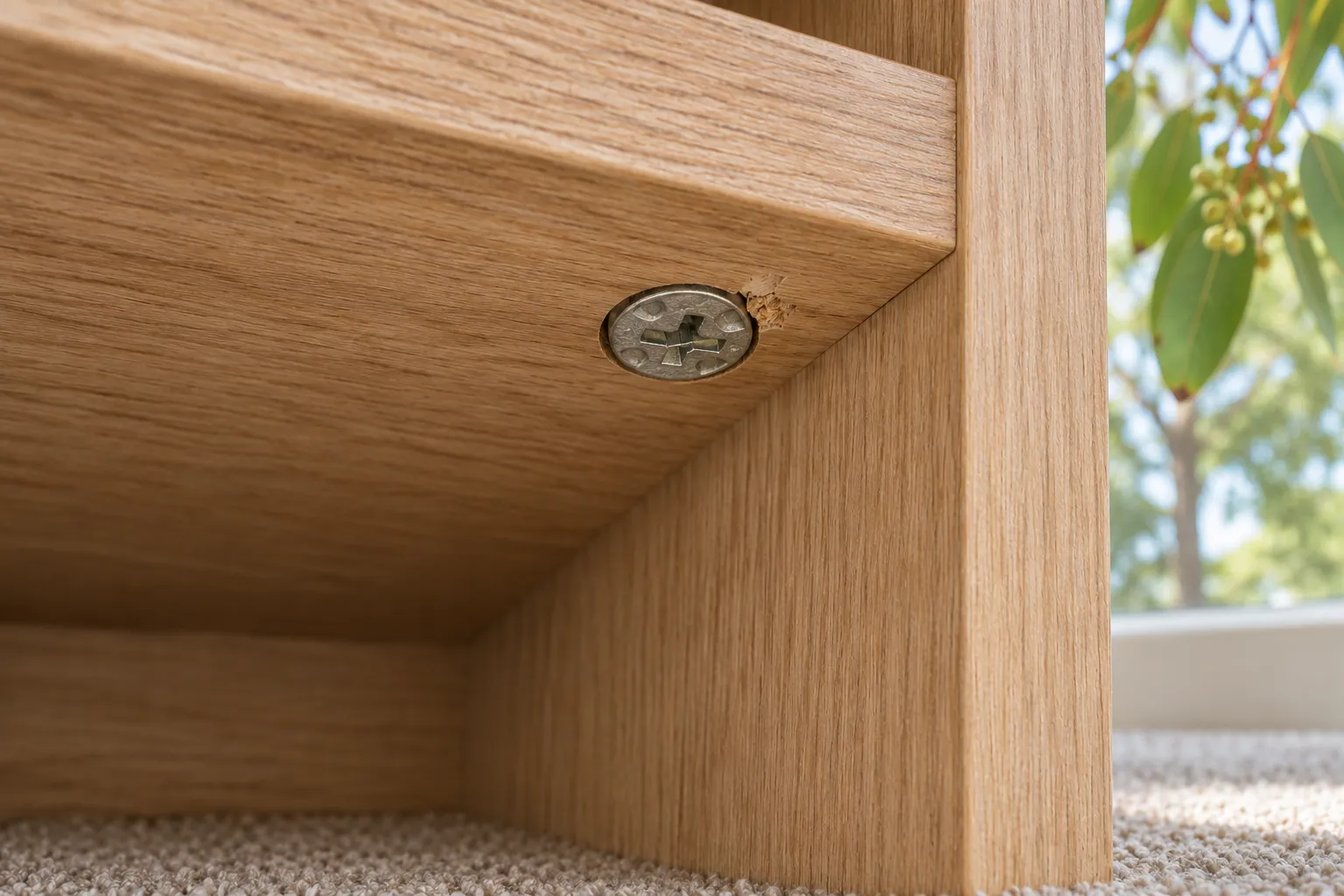
Existing warning signs include visible gaps at joints, doors that no longer align, a frame that leans or fittings that repeatedly loosen. Chipped or enlarged fastener holes also deserve attention. These signs indicate that the furniture may need closer assessment rather than a simple round of tightening.
Wall restraints may also conceal how much support a tall item needs. These should not be removed simply to test if the furniture stands securely. The removalist should be told about any restraints and known instability before the move.
The ACCC’s guidance on securing furniture against toppling explains why anchoring matters for wardrobes, bookcases and other freestanding furniture. Plan for any required restraints to be correctly reinstated when the item is set up in your new home.
When seeking practical advice for a Gosford move, include photographs of these details rather than just a front view of the furniture. Joint condition, visible damage and how the item is secured can all help with an initial assessment.
Taking furniture apart can reduce the strain involved in handling a large frame. However, dismantling is only helpful if the connections can be separated without causing further damage and the parts remain suitable for reassembly.
The decision should account for both stages: getting the item moved and putting it back into usable condition. A piece that comes apart easily does not necessarily go back together with its original strength. Its dimensions, weight, construction and the available access at each property should also influence the decision.
Start with the original assembly instructions, if they are available. They can identify the fixing system, any glued connections and components that depend on a particular assembly sequence. Instructions are useful evidence for an assessment, although assembly diagrams alone do not establish that a piece is designed for repeated dismantling.
Consider the item's history as well. Has it been moved before? Have screws been replaced, joints repaired or brackets added? A repair may have kept the furniture serviceable while making separation more complicated. Glued dowels, for instance, may not release without damaging the surrounding panel.
The furniture's current condition is also necessary. Loose joints, damaged corners and worn fixing holes can make transport and reassembly more difficult. If the item is already unstable, dismantling should not automatically be treated as the solution.
Share clear photographs and any available instructions with a removalist in Gosford before deciding. Include the full item, its back, accessible joints and any damaged areas. Mention previous repairs even if they are not visible in the photographs. An initial discussion helps identify what needs closer inspection rather than leaving the decision until loading begins.
Some fittings are intended to be released and reused, but the surrounding material can still deteriorate. Repeatedly removing a screw from the same particleboard hole may reduce its grip. Cam fittings can also become less effective if their recesses or adjoining fixing points are damaged.
This creates a trade-off when moving flat-pack furniture. Leaving a weakened frame assembled can expose its joints to twisting, while taking it apart may cause further damage during separation or reassembly. Neither option automatically restores a worn item.
Where connections are glued or fixing points are already failing, ask whether separation is appropriate at all. Avoid treating extra force or improvised replacement fittings as a routine solution. The removalist may need to inspect the piece before confirming what handling is practical.
Distinguish between removing individual components and dismantling the main structure. Some furniture may only need shelves, doors or detachable sections removed, while other pieces require more extensive work. Discuss the proposed approach for each item and if its existing condition creates any uncertainty about putting it back together.
If dismantling is appropriate, keeping the components identifiable is just as important as keeping them together. Similar-looking panels and fittings are not always interchangeable, even when two pieces of furniture appear almost identical.
Agree on a clear identification system before work starts. It should allow whoever handles reassembly to recognise each item, understand where its components belong and find the correct hardware without searching through unrelated boxes.
Reference photographs can preserve details that are easy to forget once furniture is separated. Useful images show the complete item, its internal layout and any differences between otherwise similar sections. Existing damage should also be recorded so it is not confused with something that happened during the move.
Where several similar items are moving, give each one a distinct identifier. For example, two bedroom wardrobes can be recorded as separate items rather than simply labelled 'wardrobe'. Match that identifier across the photographs, panel packaging, instructions and hardware bags.
Avoid writing directly on finished panels. Adhesive labels can also leave residue or lift delicate finishes, so agree on a suitable labelling method with the person doing the work. Labelling protective wrapping or using tags can preserve identification without marking the furniture itself.
Record differences that may affect assembly, such as a panel with an existing repair or a shelf fitted in a specific position. Do not rely on memory or assume that a panel can be reversed because both sides look similar. Hole positions and finished edges can determine exactly where it belongs.
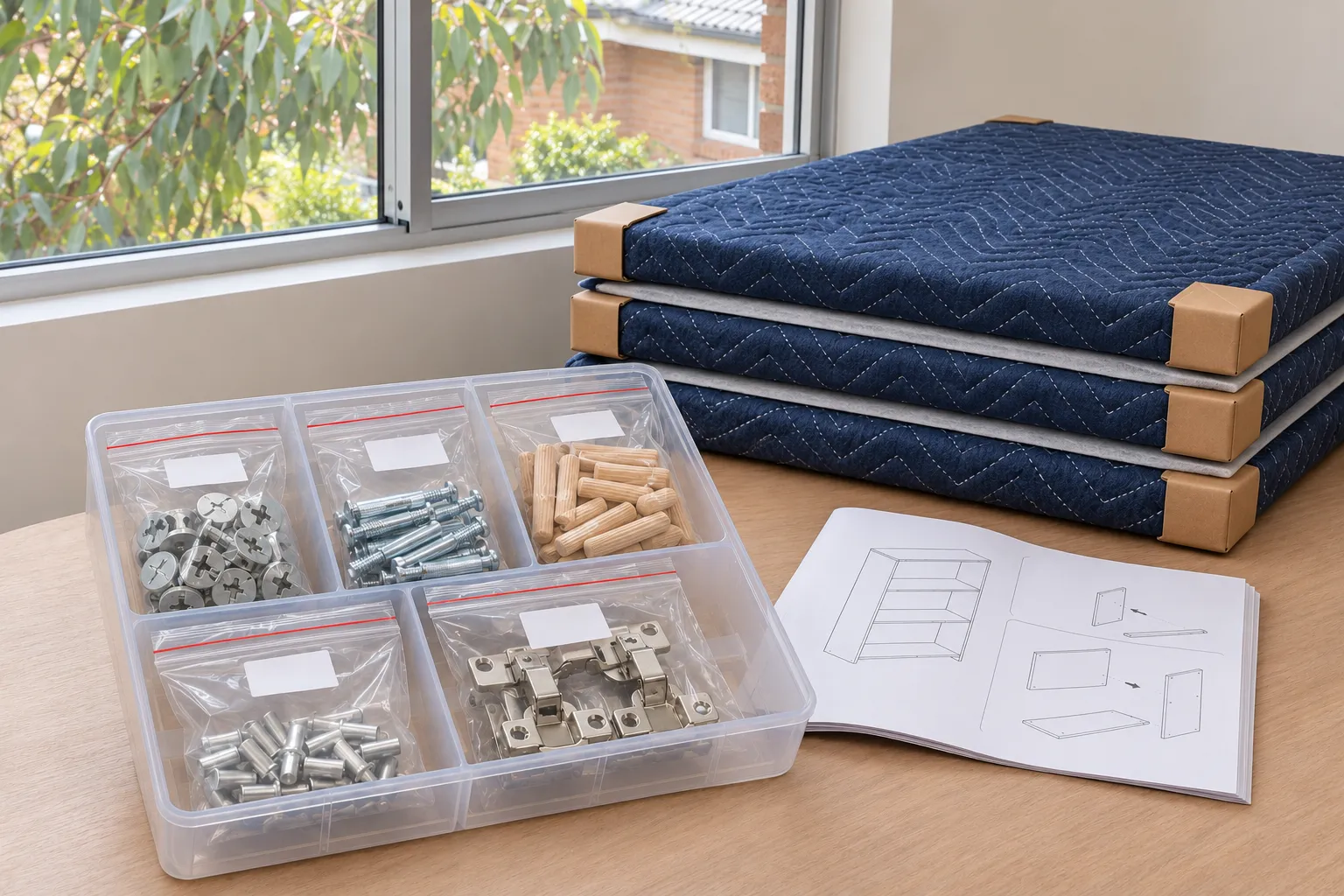
Hardware should be placed in securely closed, clearly labelled bags matched to the relevant item. Where a piece uses several types of fittings, separate labelled groups can make identification easier than one mixed bag. Small components left loose in a drawer or on a shelf are easily separated from the furniture during handling.
Agree on how the bags will stay with the corresponding components. They should be secured within that item's packaging in a way that does not damage finished surfaces or allow metal fittings to rub against them. If there is a separate hardware container, it needs an accurate contents record and a clearly agreed place during the move.
Keep paper instructions with the relevant item records and retain accessible digital copies of diagrams and reference photographs. If instructions are missing, flag that before dismantling rather than assuming the reassembly process will be obvious.
Before accepting a quote, confirm who will dismantle each item, who will label and retain the fittings and who will reassemble it. The services included in a removal booking should be clarified rather than assumed. Ask whether furniture reassembly is included in the agreed scope, whether the removalist has experience with the particular furniture and how missing hardware or pre-existing joint damage will be handled if discovered during the work.
Dismantling flat-pack furniture is not always the safest option. Its construction, existing condition, dimensions and the access available at both properties all influence whether it should travel assembled, partially separated or fully dismantled. Considering these details beforehand can prevent avoidable damage and make reassembly more straightforward.
Norm Eacott Removals & Storage helps households consider their furniture handling requirements before moving day. Discussing the items, sharing photographs and confirming which dismantling or reassembly services are included can establish a plan for the move.

Give one of our friendly team a call, and if we’re busy moving boxes you’ll get a call back within the hour!

