
Let's move!
Give one of our friendly team a call, and if we’re busy moving boxes you’ll get a call back within the hour!

Your mattress can arrive at your new home looking clean yet still have damage beneath the fabric. A torn cover, moisture trapped inside the packaging or a bend through the wrong part of its structure can create problems that are easy to overlook on moving day.
Protecting it starts before it leaves the bedroom. Suitable packaging, a plan for keeping it dry between the house and vehicle and handling methods that respect its construction can reduce the risk of damage. Norm Eacott Removals & Storage helps make the process more manageable when the moving arrangements account for the mattress's size, condition and handling requirements.
A suitable mattress moving cover should protect the entire mattress from dust, dirt and contact with potentially wet or contaminated surfaces without forcing it into an awkward shape. The right fit matters just as much as the material, as stretched corners and exposed openings can leave vulnerable areas unprotected.
Before choosing packaging, check the mattress dimensions and make sure it is completely dry. A cover can help keep outside moisture away, but it can also trap moisture that is already present.
An everyday mattress protector is designed to sit beneath the sheets. Even if it has a moisture-resistant surface, it may leave the sides or underside exposed and may not withstand contact with doorways, vehicle floors or other items during a move.
A purpose-made moving cover encloses the mattress more fully. Depending on its design, it may be a disposable plastic bag or a reusable protective cover. Check which surfaces it covers, how it closes and whether it is intended for transport rather than everyday bedding protection.
No cover should be treated as a guarantee that a mattress is waterproof. Openings, seams and accidental punctures can still allow moisture through. Protective packaging works best alongside careful handling and limited exposure to wet conditions.
Check the mattress length, width and depth rather than relying only on a size label such as queen or king. A deep mattress or one with a substantial pillow top may need more room than a standard cover allows.
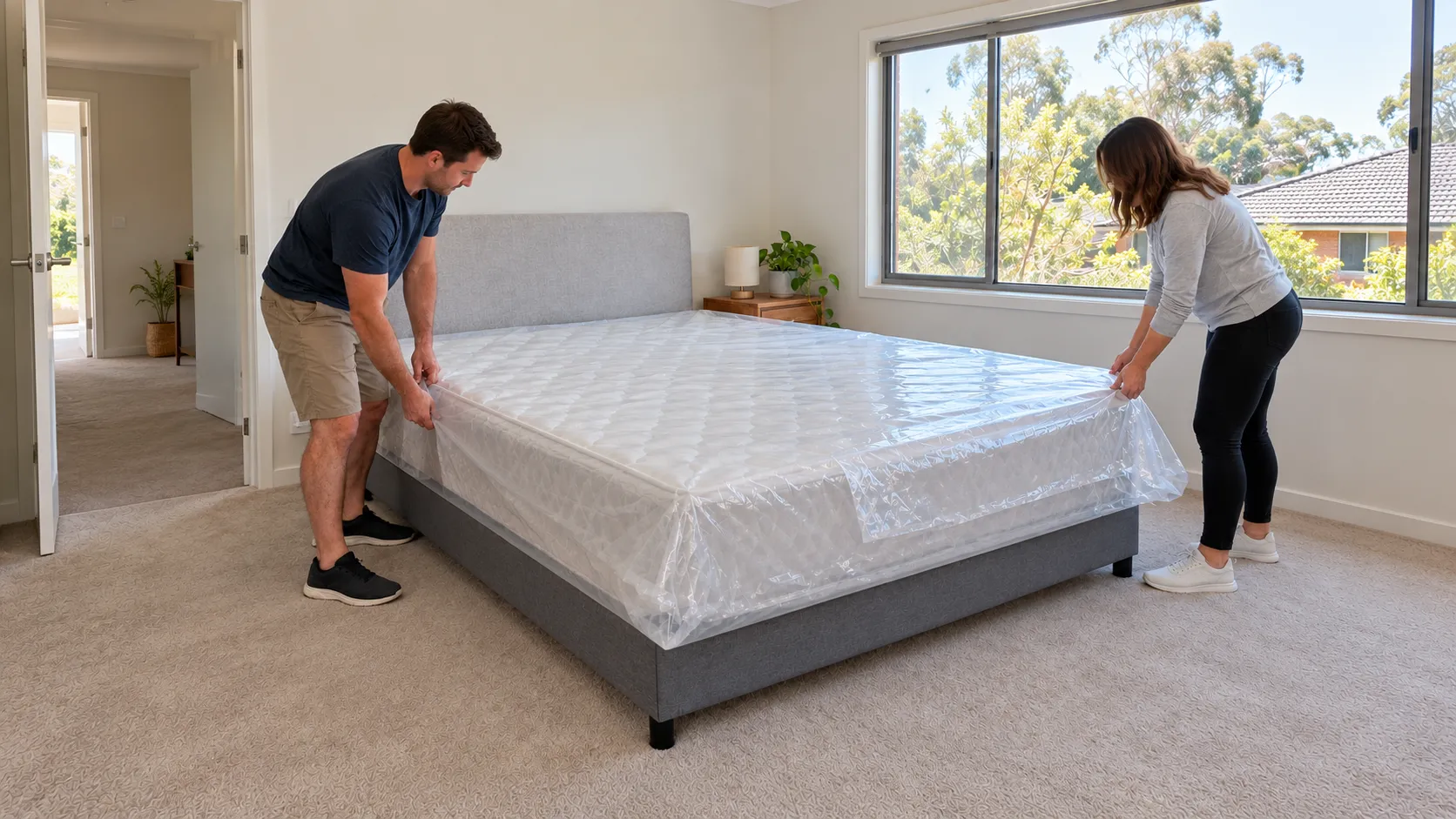
The cover should reach around every corner and close without excessive tension. If it is too tight, it may split while being fitted or moved. If it is excessively loose, spare material can catch on obstacles or gather beneath the mattress.
Secure the closure according to the cover instructions. Where tape is appropriate, apply it to the packaging rather than directly to the mattress fabric. Adhesive can leave residue or damage the surface when removed. Avoid compressing the mattress simply to make the cover fit.
For the rest of the bedroom items, these packing tips for easier unpacking can help keep clean bedding separate and accessible.
Do not seal a mattress immediately after cleaning unless it has dried fully in accordance with its care instructions. A surface that feels dry does not necessarily mean moisture deeper inside has evaporated.
If the mattress feels damp or has a musty smell, investigate before packaging it. Allow enough time for drying and seek manufacturer advice if the cause or extent of the moisture is unclear. Leaving the cover unsealed is not a substitute for resolving dampness before transport.
NSW Health’s advice on preventing mould growth explains why controlling moisture and maintaining adequate ventilation are important.
Packaging is only one part of keeping a mattress clean. The route out of the house, contact with other belongings and the condition of the cover on arrival all affect how well that protection works.
Consider the entire journey from the bedroom to the vehicle and into the new home. A mattress can encounter wet paving, dirty door frames or an exposed loading area even when the vehicle itself is enclosed. Planning for these conditions helps prevent avoidable damage.
Keep the cover in place throughout the carrying and loading process. Doorways and corners can scrape the packaging, so the mattress needs a clear route and careful handling rather than being pushed through a gap that is too tight.
Dragging a covered mattress along the ground can tear its protection. Once a hole develops, the mattress fabric may pick up dirt or water directly. A cover is a barrier, not a surface designed to slide across paving or rough flooring.
If wet weather is expected, discuss how exposure during loading will be limited. Ask what happens if rain starts while the mattress is being carried and whether the packaging needs additional protection. A plastic cover does not make prolonged exposure to rain harmless if water enters through an opening or damaged seam.
A Central Coast removalist should be able to discuss handling and loading arrangements before moving day. Explain any concerns about the mattress and confirm who will provide its protective cover rather than assuming packaging is included.
Inside the vehicle, the mattress should be protected from dirty equipment and items that could leak. Garden equipment, damp outdoor belongings and containers holding liquids should be kept away from its cover and prevented from coming into contact with the mattress through an opening.

Heavy items also need to be positioned so they cannot press into the mattress. Concentrated pressure can damage its internal structure or puncture the packaging, particularly when an object has a sharp edge or protruding part.
Professional movers should plan the load so the mattress is supported and separated from unsuitable items. The position depends on the mattress construction and manufacturer instructions, so avoid assuming that every model can be transported in the same orientation.
These broader points about how professional movers can make your move easier can help clarify responsibilities before booking.
Once the mattress is indoors in a clean, dry space, remove its transport cover and inspect it before adding bedding. Check the corners, underside, seams and any area near a damaged section of packaging.
If the mattress is damp, leave it uncovered in a suitable, well-ventilated space and follow the manufacturer's drying instructions. Do not conceal moisture beneath sheets or an everyday protector. If the mattress has been substantially wetted, develops an unusual smell or may contain moisture internally, seek manufacturer advice before using it.
Inspecting the mattress also makes it easier to identify whether any damage occurred during the move. Photograph visible tears, stains or other concerns before cleaning or attempting repairs.
Folding can look like a convenient solution when moving a mattress through a narrow opening, but convenience does not establish that it is safe. Bending, folding or trying to recompress a mattress may damage internal components or affect how it supports the body.
The appropriate handling method depends on the mattress. Check the manufacturer's instructions before moving day and share them with the removal team, especially if access appears tight.
Spring, foam and hybrid mattresses have different internal structures, but their broad category alone does not determine how they should be transported. Materials, layer arrangements and construction methods vary between models.
A sharp bend may distort springs or place stress on the layers and connections inside a mattress. Foam mattresses should not automatically be treated as foldable either. Some models may tolerate specified movement, while others have restrictions that are not obvious from how flexible the surface feels.
A mattress that originally arrived compressed is not necessarily suitable for being compressed again at home. Its original packaging process may have involved specialised equipment and controlled conditions. Do not roll it tightly or attempt to recreate that packaging without explicit manufacturer approval.
There is also no universal rule that every mattress must travel flat or on its side. Ask for model-specific guidance on orientation, support and any limits on the time spent in a transport position. If the instructions are unclear, contact the manufacturer rather than relying on a general rule.
Stitched handles can look substantial, but they may be intended only for adjusting the mattress on its base. Their presence does not mean they are designed to carry its full weight during a move.
Using positioning handles for lifting can tear the stitching or surrounding fabric. The attachment points may not be designed to support the mattress's full weight, even when the handles themselves appear strong.
Check the mattress instructions for the intended purpose of its handles and tell the movers about any restrictions. Handlers can determine a suitable carrying method without relying on the handles as lifting points. A protective cover does not strengthen those attachment points.

Give experts the mattress length, width and depth, along with its type and any relevant manufacturer instructions. Include fixed features such as a thick pillow top rather than describing it only by its bed size.
Explain any access constraints that could affect the move, including narrow bedroom doors, tight stair turns and restricted hallways. Photos can help communicate the available space, although they do not replace an assessment of the route.
SafeWork NSW’s guidance on managing manual handling risks explains why movers should assess forceful exertion and awkward postures when planning the task.
Ask how the mattress can be moved without exceeding its handling limits. If access appears to require folding that the manufacturer does not permit, discuss alternatives before moving day rather than making a rushed decision at the doorway.
Keeping a mattress in good condition during a move involves more than placing it inside a plastic cover. Correctly fitted packaging, a completely dry mattress, careful loading and manufacturer-approved handling methods help reduce the risk of contamination or structural damage.
Before moving day, confirm the mattress dimensions, check its care instructions and explain any access restrictions to the removal team. Inspect the mattress as soon as it reaches the new home so any concerns can be addressed promptly.
Norm Eacott Removals & Storage assists in coordinating the details of a move, including the handling requirements of larger bedroom items. Discussing these arrangements in advance helps ensure the mattress can be transported with suitable protection and care.

Give one of our friendly team a call, and if we’re busy moving boxes you’ll get a call back within the hour!

