
Let's move!
Give one of our friendly team a call, and if we’re busy moving boxes you’ll get a call back within the hour!

A washing machine can look ready to move as soon as the laundry basket is empty. However, water may remain inside, and its internal components may need specific protection before transport. Moving a washing machine safely involves more than wrapping the cabinet to prevent scratches.
For households moving in Gosford, checking the appliance's requirements early helps prevent delays and avoidable damage. Norm Eacott Removals & Storage can help with the moving process, while proper preparation ensures the machine is ready for transport and can be safely reinstalled at the new home.
The preparation required depends on the washing machine's model, not simply its size or whether it is a front loader or top loader. Checking the manufacturer's instructions first helps establish which transport precautions are necessary, what parts are required and whether professional assistance is needed.
Complete these checks before moving day. This allows time to source missing parts, arrange disconnection and confirm which tasks are included in the removal booking.
Locate the model number on the appliance's identification label or in the original purchase records. Use it to find the correct manufacturer's manual, as instructions for a similar-looking machine may not apply to the exact model.
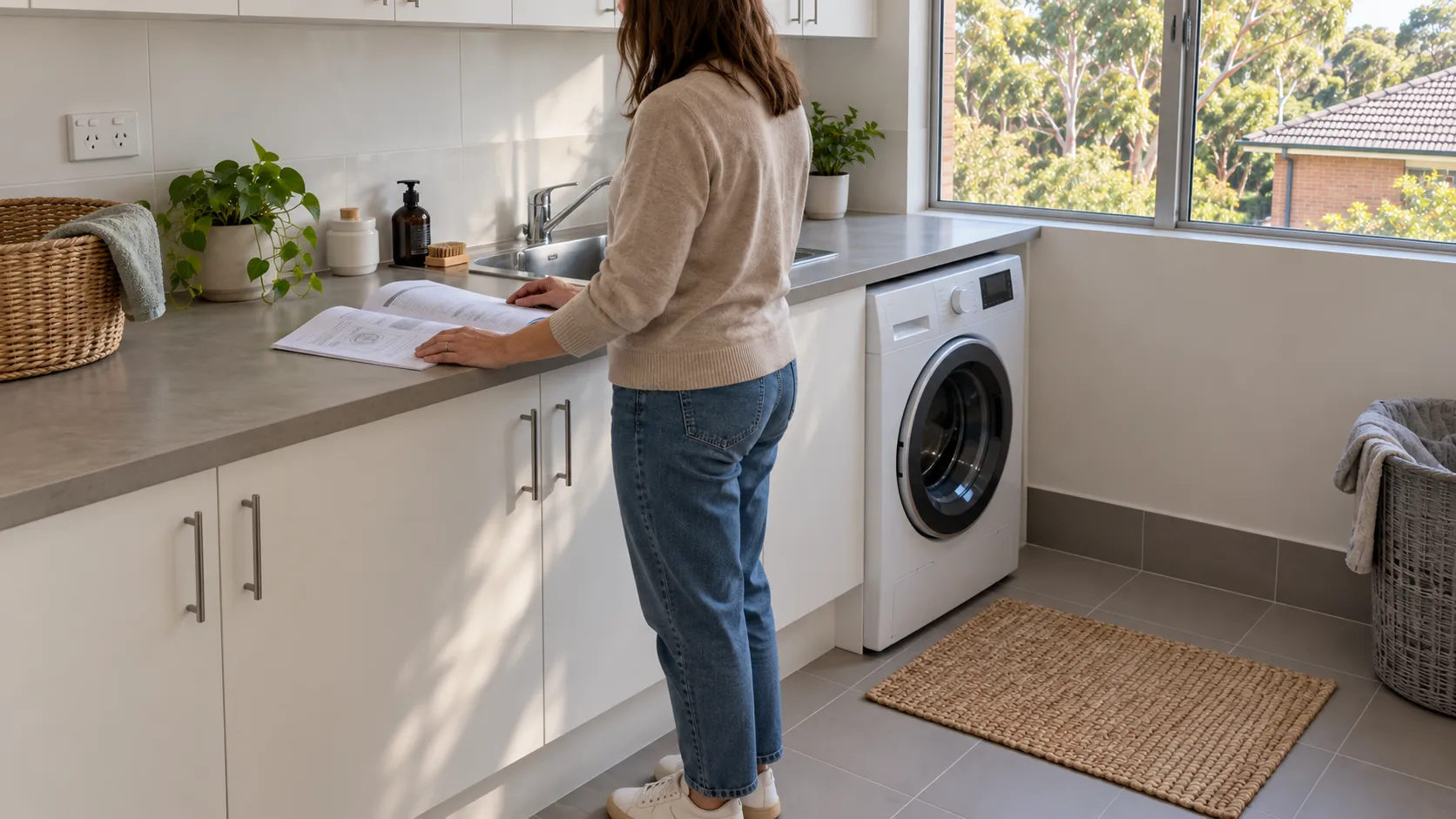
Look for guidance on moving, transport and reinstallation. Installation instructions alone may not cover the preparation required for a machine that has already been used. If the transport information is missing or unclear, ask a professional to confirm the requirements.
Keep the manual or relevant instructions available for anyone preparing or handling the machine. If the identification label is difficult to reach, avoid moving the heavy appliance just to locate it. Arrange assistance if necessary.
Many front-loading washing machines require transit bolts or other specified restraints to secure the drum assembly during transport. These restraints help limit movement that could damage internal components. External padding serves a different purpose by protecting the cabinet from scratches and impacts.
Top-loading machines may have different transport requirements, so instructions for a front loader should not automatically be applied to another design. Equally, a top-opening machine should not be assumed to need no preparation.
Check the manufacturer's instructions to determine whether restraints or other precautions are required. When booking a removalist Gosford service, discuss these requirements before moving day. Confirm who will prepare the appliance and whether any specialist parts or services need to be arranged separately.
If the washing machine requires transit bolts, check whether the original set was retained after installation. They may be stored with the manual, appliance paperwork or other installation accessories.
Finding a set of bolts is not enough to establish that they are suitable. The parts must match the specific model and be fitted according to the manufacturer's instructions.
If the original bolts are missing, contact the manufacturer to arrange replacements. Do not substitute ordinary bolts or parts from another machine, as incorrect components may fail to secure the drum properly.
Allow enough time for replacement parts to arrive and for any required fitting to be completed. Leaving this task until collection day can delay the move or result in the appliance not being ready for transport. Planning helps prevent common moving day mistakes, specifically when several preparation tasks need to be coordinated.
A completed wash cycle does not necessarily mean a washing machine is dry inside or ready for transport. Water can remain in hoses, filters and other internal areas, while the appliance's weight makes moving it through a home a task that requires suitable equipment and careful handling.
Before collection, confirm who will disconnect the machine, manage residual water and prepare it for loading. These responsibilities should be settled separately from the transport booking unless the removalist has confirmed that they are included.
Avoid running the final wash immediately before the removal crew arrives. The appliance may still need to be drained, disconnected and prepared according to its manufacturer's instructions.
There is no single waiting period that makes every washing machine ready for transport. Read the relevant instructions and agree on a preparation schedule with the person handling the disconnection.
Preparation may involve draining accessible water from designated drainage points and hoses, following the model's specified procedure. Some water may remain in internal components, so an empty drum and dry exterior do not necessarily mean the appliance is fully drained.
Tell the removalist if preparation is incomplete or if water is still leaking. Residual water can escape during movement, wet protective materials and damage other belongings. Confirming readiness before loading gives the crew time to address any concerns.
Have the machine disconnected safely and prepared according to the manufacturer's instructions. Where plumbing work requires a licensed plumber, arrange one before collection. Professional assistance is useful when connections are difficult to access, fittings appear damaged or the laundry layout makes removal complicated.
Before booking plumbing work, check the plumber’s licence through Service NSW to confirm they hold a current licence for the work required.
When arranging the service, describe the machine's location, its connection points and any access restrictions. Mention visible leaks or other problems so the person attending can assess what is needed.
Confirm whether disconnection and water management are included in the booking. Removalists may transport and position an appliance without providing plumbing work or specialist appliance servicing.
Before the machine is moved, establish that it has been disconnected, accessible water has been managed and any required transport preparation has been completed. Keep removed hoses, transit bolts and other model-specific parts together and label them to remain identifiable at the new property.
The washing machine's door, control panel and projecting parts should not be used as lifting points. Its weight, dimensions and access route all affect how it can be moved safely.
Removalists can assess the handling requirements and use suitable equipment to move the appliance through doorways, along hallways and into the transport vehicle. The machine should be secured and positioned according to its manufacturer's transport instructions.
SafeWork NSW’s guidance on hazardous manual tasks explains how handling risks can be assessed and managed.
Protective wrapping or padding helps prevent scratches and contact damage, but it cannot replace required drum restraints. Both external protection and internal transport preparation matter.
Do not assume that every washing machine can be transported in the same orientation. Provide the relevant instructions to the removalist and resolve any uncertainty before loading.
When obtaining a quote, confirm whether the service covers moving the appliance from its current position, any special handling requirements and placement at the new home. Ask separately about disconnection, transit restraints and installation so there is no confusion about what the crew will complete. For more information about the benefits of professional assistance, see how a removalist can make your move easier.
Delivery does not automatically mean a washing machine is ready to operate. Its transport restraints may need to be removed, its position checked and its water connections secured before the first wash.
Arrange installation before moving day, particularly if the new laundry has different plumbing connections or limited space. Knowing who will complete the setup helps prevent the appliance from being used before the necessary checks are finished.
Confirm that the intended laundry space accommodates the washing machine and provides the clearances specified in its manual. The appliance must also have suitable support, accessible connections and enough room for installation and future maintenance.
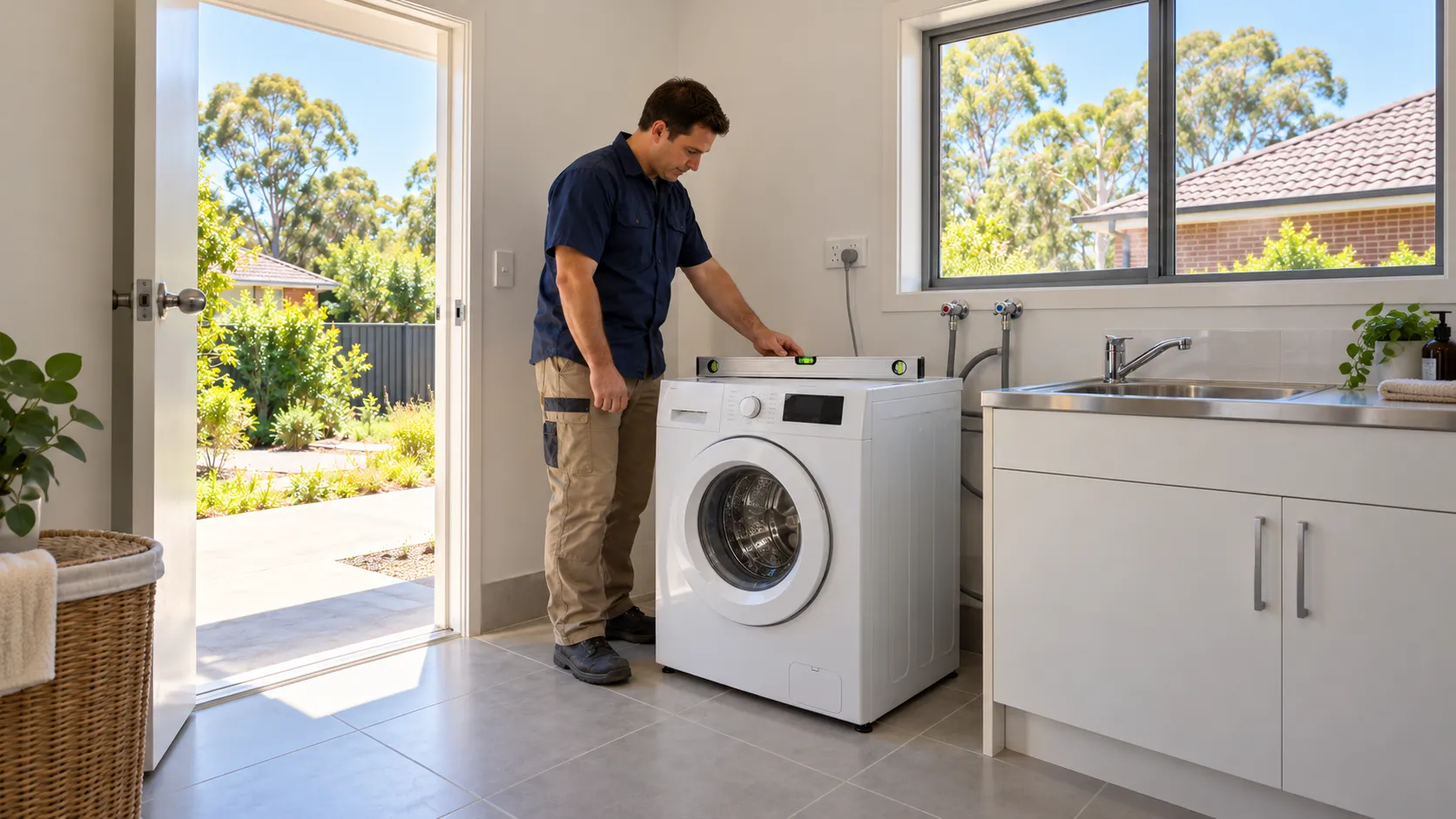
Tell the installer about differences between the old and new laundry. Changes to the position of water outlets, drainage connections or available space may affect the work required.
Have the machine positioned, levelled and connected according to the manufacturer's instructions. Use a licensed plumber where plumbing work requires one, and confirm whether the removalist provides placement only or any additional installation services.
Before operating the appliance, check that its connections are secure and that the installation has been completed correctly. There is no universal waiting period that makes a washing machine ready to use; readiness depends on the manufacturer's instructions and the work completed.
If transit bolts or other transport restraints were fitted for the move, they must be removed as directed by the manufacturer before the washing machine is operated. These components limit movement during transport, but leaving them fitted during normal operation can cause excessive vibration and damage the appliance.
Confirm that all required restraints have been removed. Do not judge readiness by the cabinet's appearance or whether the machine powers on, as transport components may be difficult to see once the appliance is in position.
Keep the removed bolts and other reusable transport parts with the manual and model details. Label them if necessary so they can be identified easily during a future move.
If nobody can confirm whether restraints were fitted or removed, contact an appliance professional before running a cycle. Resolving the uncertainty first is safer than discovering an installation problem during operation.
Before using the washing machine, ask the installer to explain any final checks and what to monitor during the first cycle. A change in position or an incomplete installation can reveal problems even when the appliance appears undamaged after delivery.
Watch for water leaking from the connections, unusually strong vibration or unexpected movement. If any of these problems occur, stop using the machine and arrange an assessment rather than repeatedly running cycles to see whether the issue resolves itself.
If leaking water creates an electrical or other immediate safety risk, keep clear of the affected area and seek appropriate assistance. Do not move the appliance or touch wet electrical equipment to investigate the problem.
Record what happened and when it occurred, including whether the issue appeared during filling, washing or spinning, if this can be identified safely. If the machine arrived with visible damage, photograph it and report the problem promptly to the removalist. Keep delivery notes and other records available in case they are needed.
Moving a washing machine safely requires the right transport preparation, careful handling and correct installation at the new property. Checking the manufacturer's instructions, arranging disconnection in advance and confirming that transport restraints are removed before operation can help prevent avoidable damage and delays.
Norm Eacott Removals & Storage assists with the transport arrangements. Confirm the appliance's specific requirements and the services included in the booking before moving day to help ensure the move proceeds and the washing machine is ready for its next use.

Give one of our friendly team a call, and if we’re busy moving boxes you’ll get a call back within the hour!

