Let's move!
Give one of our friendly team a call, and if we’re busy moving boxes you’ll get a call back within the hour!

Leaving your clothes in a chest of drawers can seem like an easy packing shortcut. Your clothing is already organised; the drawers are full and emptying everything means finding more bags or boxes. However, a chest that works perfectly well in your bedroom may not be suitable for moving with its contents inside. Norm Eacott Removals & Storage can help you determine how your furniture should be prepared, based on its condition, construction and the requirements of your move.
The answer depends on the furniture, what each drawer contains and how the chest needs to travel from one home to the next. Lightweight clothing may sometimes be left inside, but heavier items, fragile furniture and difficult access routes can change the decision. Checking these details before your move helps you avoid last-minute repacking and gives your removal team the information needed to plan the handling.
Sometimes lightweight clothing can stay in drawers, but you should have this agreed with your removal team rather than assume it is acceptable. The decision concerns the whole piece of furniture, not just whether an individual drawer feels lightly packed.
A few loosely folded T-shirts in a sturdy chest present a different situation from tightly packed drawers in a fragile unit. Neither the size of the chest nor the fact that it has been moved before provides a reliable answer on its own.
Drawer contents add to the weight the team must handle. Even clothing that seems light in small amounts can make a noticeable difference across several full drawers. A solid timber chest may already be heavy before anything is packed inside it, while a lighter unit may have less robust drawer bases or joints.
The type of clothing also matters. Socks, underwear and lightweight tops add less weight than jeans, jumpers and other heavier garments. Tightly packed drawers can place additional strain on the furniture, even when everything inside is soft.
There is no universal weight limit that tells you whether clothes can remain inside. Construction, condition, dimensions and access all affect the decision. Trying to lift a loaded chest yourself is not a suitable way to assess it. SafeWork NSW outlines the factors that affect safe manual handling, helping explain why your removal team needs to consider more than the chest’s weight alone.
When comparing removalists in Central Coast, ask if your chest can travel with clothing inside. Give removalists its approximate dimensions, the number of drawers and a description of its construction and contents. Photos of the whole unit and any visible damage can help the discussion, although the team may still need to assess it on arrival.
Soft items such as underwear, socks and lightweight tops are different from books, shoes or miscellaneous objects tucked beneath them. Dense contents add weight quickly, while loose objects can slide around and strike the inside of a drawer.
Be accurate about what is stored there. A drawer described as holding clothes might also contain belts, spare coins, accessories or other household items. These details can change the packing advice.
As a general preparation step, remove books, shoes, heavy accessories and anything that could shift during transport. Even if the removal team approves leaving some clothing inside, this does not mean every drawer can remain untouched.
Ask about the drawers before finalising your packing schedule. If they need emptying, that task belongs in your preparation time rather than being left until loading begins. Understanding how long moving house can take can help you allow time for these smaller decisions as well as the larger packing jobs.
Even a lightly loaded chest may need emptying if it is damaged or must be manoeuvred through an awkward route. Removalists must consider both the furniture's condition and the positions it may pass through during handling.
Something as simple as a tight bedroom doorway can affect if contents should stay inside. The question is not just if the chest fits but if it can be moved safely without placing avoidable strain on its drawers and frame.
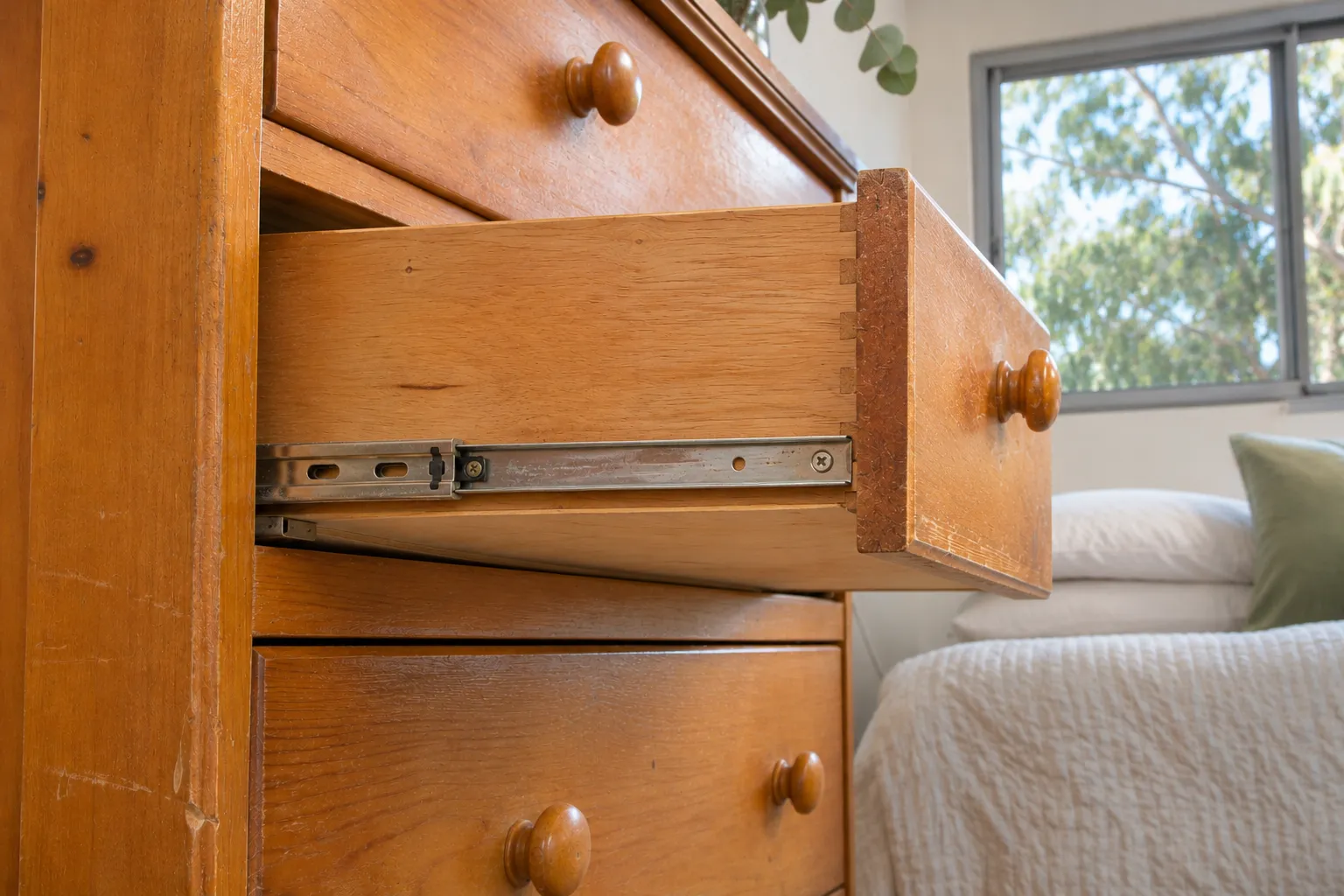
Drawer runners, bases and joints deserve attention. A thin base that is already sagging may cope with folded clothes while stationary but be vulnerable during handling. Loose runners can allow a drawer to move unexpectedly, and an existing split may worsen under additional load.
Tell the experts if a drawer sticks, drops when opened or does not close squarely. Mention missing stops, loose handles, wobbling joints or a backing panel that has pulled away. These are useful observations, not a request for you to dismantle or test the furniture.
Material alone does not settle the issue. Solid timber can be heavy and may have aged joints, while flat-pack furniture varies in construction and condition. A chest that looks substantial is not necessarily suitable for moving fully loaded.
Some flat-pack furniture manufacturers also provide specific instructions for transporting assembled units. Check these recommendations if you still have the assembly instructions, particularly if the chest has lightweight panels, cam-lock fittings or a history of loose joints.
You do not need to pull the chest away from the wall or tip it to investigate. Share damage you already know about and provide accessible photos if requested. Let the team decide if closer inspection or a different handling approach is needed.
A chest may need to tilt to clear a doorway, turn on a landing or travel along stairs. Clothing that stays neatly folded when level can shift against drawer fronts or bases once the angle changes. Drawers may also slide unless they are appropriately secured or removed.
This is why advice given for a ground-floor room with a straight exit may not apply to an upstairs bedroom with a narrow turn. The route at the destination matters too. Approval should account for both ends of the move, rather than only the easiest part.
Describe stairs, tight corners and restricted doorways when discussing this particular piece. These local moving challenges are worth flagging before moving day because they can change how furniture is prepared.
Depending on the furniture's construction and the carrying route, the removalists may recommend removing the drawers, securing them using an appropriate method or transporting them separately. Some units have removable drawers, while others have release mechanisms or stops that should not be forced.
Avoid taping drawers shut in advance or assuming that a chest can stay upright throughout the move. Adhesive tape can damage finished surfaces or leave residue, and it does not address weaknesses in the furniture itself. If the team recommends emptying the drawers, have suitable bags or boxes available before moving day.
Permission to leave soft clothing inside is not permission to leave every drawer untouched. Valuables, liquids and loose objects should be dealt with separately, even if the chest itself is suitable for moving with some contents.
Check every drawer rather than relying on memory. Small items often collect beneath folded clothes or at the back, where they are easy to overlook until the furniture changes angle.
Remove jewellery, cash, important documents and small sentimental items. Keep them in clearly identified, secure packing that you can account for separately from the furniture. A drawer is not a suitable place to leave something simply because it is usually stored there.
Take out toiletries, perfume, cosmetics and any other liquids. A closed lid does not eliminate the possibility of leakage if a container tips or is pressed against another object. A spill inside a chest can affect both the clothing and the furniture's finish.
Loose batteries, coins, pens, keys and hard accessories also need attention. They can rattle around, become trapped besides a drawer or mark internal surfaces. Remove sharp objects and anything breakable rather than cushioning them between clothes and hoping they stay put.
Belts with substantial buckles and accessories with rigid fittings are better packed separately if they could shift against the furniture. The useful distinction is between soft clothing and objects that introduce weight, hard edges or the possibility of a spill.
Do not apply adhesive tape directly to finished surfaces without advice. Tape can leave residue or damage a finish when removed, and it does not address underlying weaknesses in runners or drawer bases. Ask the team how the drawers will be secured and if any preparation is required from you.
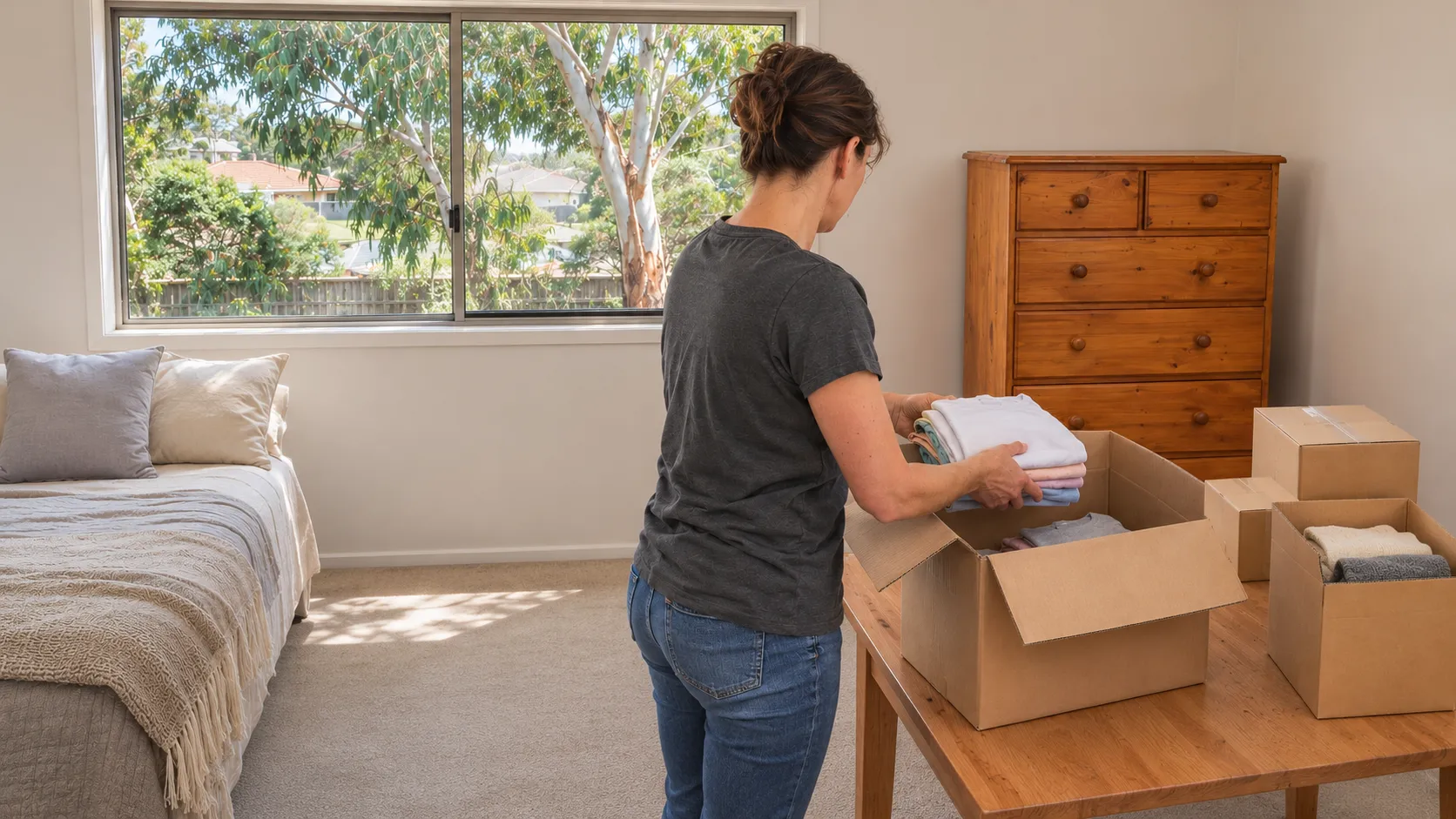
If the team recommends emptying the chest, you can preserve your organisation without leaving the clothes inside. Pack the contents of each drawer together in a suitable bag or box and label it with the room, the piece of furniture and the drawer position.
For example, "Main bedroom chest, top drawer, socks and underwear" is more useful than simply writing "Clothes". Keep the folded groups together where practical, but avoid overfilling containers simply to fit a whole drawer into one package. Split the contents and repeat the label if necessary.
The Australian Furniture Removers Association provides advice on grouping and labelling belongings for your move, including keeping related items together and clearly marking each carton’s destination room.
Choose bags or boxes that can comfortably support their contents without becoming too heavy to carry. Keeping each drawer's clothing together also makes unpacking easier because you can return everything to its original place without sorting through several mixed containers.
Set aside clothing you will need immediately so you do not have to reopen packed bags on your first night. Once the drawers are empty, check the corners for overlooked objects and leave the drawers in place unless the removal team has asked you to remove them.
Leaving clothes inside a chest of drawers can save packing time, but it should never be assumed to be suitable for every piece of furniture. The weight of the contents, drawer construction, existing damage and carrying route all influence how the unit should be prepared.
Before moving day, discuss the furniture with Norm Eacott Removals & Storage and provide details about its condition, contents and access requirements. Their advice will help you decide whether lightweight clothing can remain inside or the drawers should be emptied and transported separately. A little preparation beforehand makes furniture handling more straightforward and helps your move get underway with fewer last-minute surprises.
Give one of our friendly team a call, and if we’re busy moving boxes you’ll get a call back within the hour!

