Let's move!
Give one of our friendly team a call, and if we’re busy moving boxes you’ll get a call back within the hour!

You do not have to carry boxes or move furniture to stay in control of your house move. Whether physical work is not an option or you simply prefer to have someone else handle it, you can remain involved by making decisions, explaining priorities and confirming where belongings should go. With the right arrangements, Norm Eacott Removals & Storage can help make your move more manageable by taking care of the physical work involved in relocating your household.
A successful move requires planning for more than transportation between addresses. Packing, loading, unloading, furniture placement and unpacking all must be considered if you want to settle into your new home without shifting boxes yourself. Knowing what assistance to arrange, how to communicate your requirements and which tasks may need separate support can help you organise a move that suits your needs.
Preparation does not have to mean clearing cupboards, building sorting piles or moving everything into one room. You can make the necessary decisions while your belongings remain exactly where they are, with someone else handling the physical sorting, labelling and packing.
The aim is to make your instructions clear enough that helpers do not need you to fetch, carry or demonstrate anything. A room-by-room record is often more useful than a collection of piles that you would then need help to move again.
Work through your home by location rather than physically gathering similar items together. For example, you can decide what happens to the contents of one kitchen cupboard before moving on to the next. If opening cupboards or reaching shelves is not practical, ask a helper to show you the contents or take photographs for you to review.
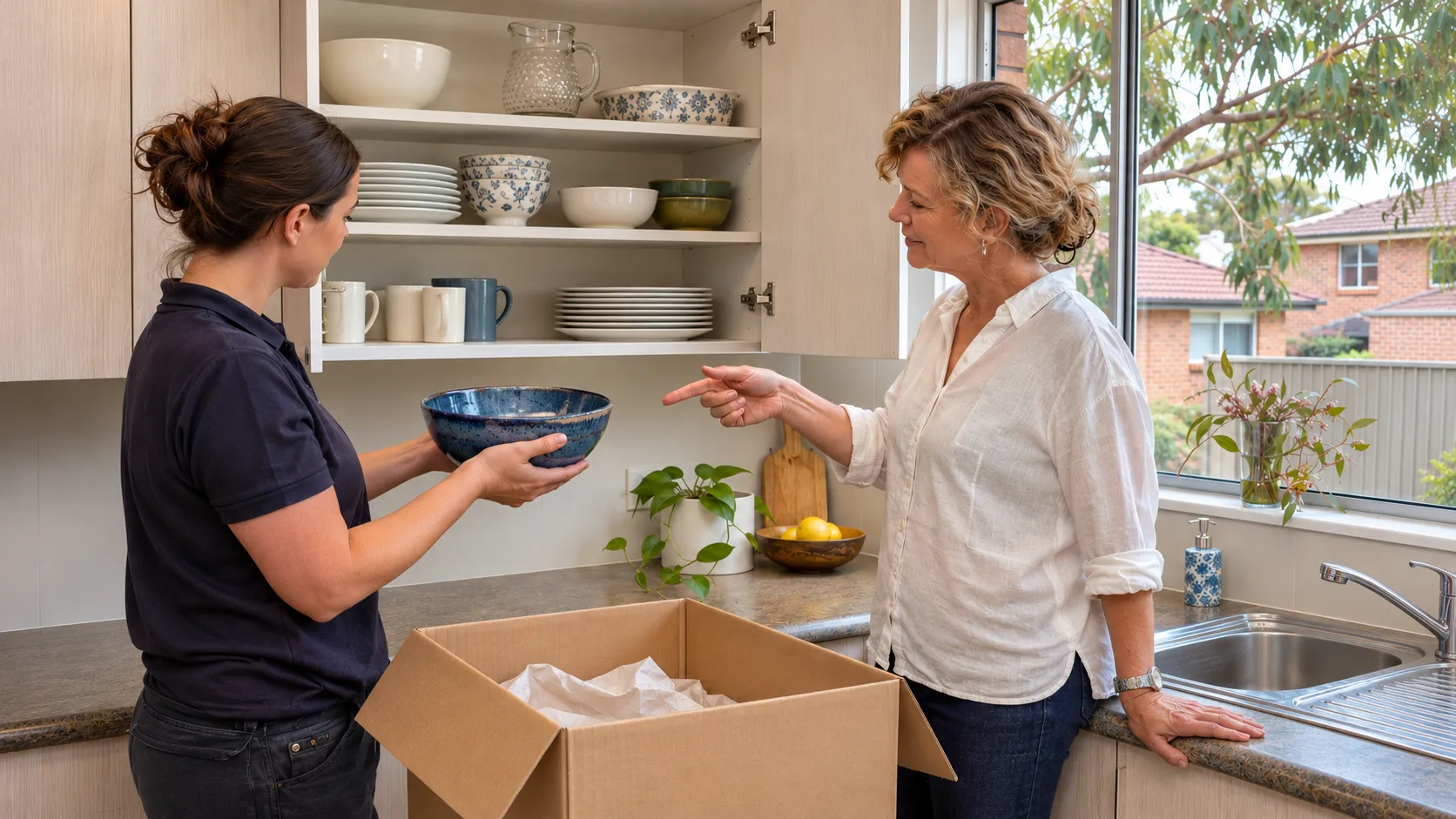
Record decisions in a way that identifies each item precisely. "Keep the blue serving bowl on the top kitchen shelf" is clearer than "keep the good bowl". For furniture, use a photograph or a short description paired with its current room. This reduces the chance that someone will need to move an item just to check which one you mean.
You can also decide destinations before anything is packed. A small table currently in a bedroom might belong in the new lounge room. Note its intended destination rather than assuming the room it comes from will tell the removal team where it should go.
Ask a helper to apply clearly written labels to belongings or storage areas where appropriate. Use words such as "moving" and "staying" rather than colour alone, and agree on what each label means. If labels are being attached to furniture, have the helper choose a suitable method that will not damage or mark the surface.
Be clear about belongings that must not be loaded. These might include items remaining at the property or personal essentials travelling separately. Identify them in place, then arrange for a helper to separate them if necessary. Do not rely on remembering to point everything out while loading is underway.
If you are still deciding what to keep, these practical ways to declutter before moving can help with the decision-making. Any suggestion involving lifting, sorting piles or moving furniture can be delegated rather than treated as a task you must complete yourself.
Keep one current version of your instructions and give helpers access to it. If a decision changes, update that record so an old label or earlier conversation does not send an item to the wrong place.
Also, consider accessibility when planning your new home's layout. Identify frequently used belongings that should be stored at comfortable heights, and avoid relying on high shelves or difficult-to-reach cupboards for everyday essentials. You can communicate these preferences before packing begins.
Moving without heavy lifting requires more than arranging a truck and someone to carry furniture. Packing cupboards, closing cartons, opening boxes and putting belongings away are separate tasks, and you need to know who will handle each one.
When comparing suppliers, explain your intended level of participation at the enquiry stage. Saying "I will not be lifting, packing or moving boxes" is much clearer than asking for a little extra help on moving day.
Distinguish between removalist services and additional packing or unpacking assistance. Some providers offer several services, while others focus primarily on transportation, loading and unloading. Confirming these arrangements beforehand helps prevent unexpected physical tasks being left for you after the removal team has departed.
When speaking with a Central Coast removalist, describe what needs to happen before belongings can be loaded. That might include taking items off shelves, packing kitchen contents or preparing clothing for transport. Ask professionals what assistance is available and which tasks must be arranged separately.
Do not assume that a transport quote includes packing materials or the labour required to pack every room. Ask what the quote covers, what preparation is expected from you and if the proposed arrangement still works if you complete none of the physical preparation. If a friend or family member will handle part of the packing, give them a defined task rather than leaving expectations that they will finish whatever remains.
Personal essentials also need an assigned helper. You can choose the clothing, toiletries, keys, documents and chargers you want accessible, while someone else gathers and packs them. Confirm who will carry that bag and where it will be placed at the destination so it does not become another item you must retrieve from a loaded carton.
For other preparation tasks, review how to prepare your home for the removal team and allocate any physical work to someone who has agreed to complete it.
Ask specific questions about the work required after unloading. Does the agreed service include placing furniture in nominated rooms? Is assistance available for opening cartons, removing contents or taking away packing materials? These are different tasks, so a general promise to "help with the move" is not enough detail.
If unpacking support is not included or available, arrange another helper before moving day. Explain that placing a sealed carton on the floor will not necessarily make its contents accessible. The required task may involve opening it and putting selected belongings on a shelf, bench or in a cupboard.
Clarify whether furniture assembly, appliance reconnection and other setup tasks are included. These services may need to be organised separately through suitable providers. For example, having a washing machine delivered does not necessarily mean it will be connected and ready to use.
Have the agreed scope recorded with your booking details, including any work you are arranging separately. Where access or the amount of packing is uncertain, provide photographs or request clarification before accepting a quote. This gives you a more useful basis for comparing suppliers than price alone.
The box’s position matters almost as much as the room it reaches. A carton delivered to the correct bedroom can still be unusable if it blocks a wardrobe, sits underneath several other cartons or leaves everyday belongings out of reach.
Plan for the activities you need to manage first, such as getting dressed, preparing something to eat, using the bathroom and going to bed. Give your helpers practical placement instructions before unloading rather than relying on being able to rearrange everything afterwards.
Choose a small selection of belongings for immediate use. Instead of labelling a carton only "kitchen", identify one containing everyday cups, plates and cutlery, then nominate where its contents should be placed. Apply the same approach to clothing, towels and toiletries. You decide what you need and where it belongs, while the agreed helper handles the unpacking.
Think about the final position of individual items, not just their boxes. A sealed clothing carton besides the bed is not equivalent to having clothes accessible in a drawer. Likewise, a box of food preparation items on the kitchen floor may still leave you needing someone to lift and unpack it. Tell your helper which selected contents need to be ready for use first.
Consider the height and accessibility of storage areas when deciding where belongings should go. Frequently used items should be placed on shelves, benches or in drawers that you can comfortably reach. Avoid arrangements that require you to bend repeatedly, stretch overhead or move other belongings to access something you use regularly.
Confirm what is required to leave your bed usable, including any furniture assembly and putting bedding in place. Ask who will complete each task rather than assuming it forms part of transportation. Keep the bedding identifiable and avoid having it packed among items that can wait.
Clear labels make these priorities easier to follow. These packing tips for easier unpacking will help you plan carton descriptions and destinations, even when someone else is doing all the packing.
Nominate a place for cartons that do not need immediate attention. Choose it with your helpers so stored boxes do not block doorways, furniture access or routes between frequently used rooms. A spare room may be useful if you have one, but it still needs a placement plan rather than being filled indiscriminately.

Be attentive to door swings, wardrobe doors and the space besides your bed. Ask for cartons to be placed where labels remain visible and where the person unpacking can reach them without first shifting unrelated items. Avoid instructions that depend on you moving a box later to gain access.
Hallways, entrances and pathways between essential rooms should remain clear throughout the unloading process. This is important if you use a mobility aid or need extra space to move safely around your home. Ask helpers to avoid leaving loose packing materials, furniture or cartons in these areas.
The Victorian Government’s Better Health Channel also recommends keeping walkways clear to reduce trip hazards, which is useful when planning where helpers should place cartons and packing materials.
Before the delivery team leaves, check placement against your agreed instructions. You can direct this check from a suitable position or have a nominated helper walk through with the team. Raise any placement issues while assistance is still present, recognising that changes outside the agreed work may need further discussion. You or your nominated helper can use the NSW Health home safety checklist to review furniture placement, floor clutter and clear access before assistance finishes.
Moving house without carrying or shifting anything is possible when the physical work is properly planned and delegated. By organising packing assistance, communicating clear instructions and deciding where belongings should go before unloading begins, you can remain involved without taking on tasks that are difficult or unsuitable for you.
The most important step is confirming who will handle each part of the move, from preparing belongings at your current property to making essential items accessible in your new home. Norm Eacott Removals & Storage will discuss your moving requirements and determine which removal services and additional arrangements may suit your situation. Contact them to discuss your needs and plan a move that allows you to settle in without having to do the heavy work yourself.

Give one of our friendly team a call, and if we’re busy moving boxes you’ll get a call back within the hour!

